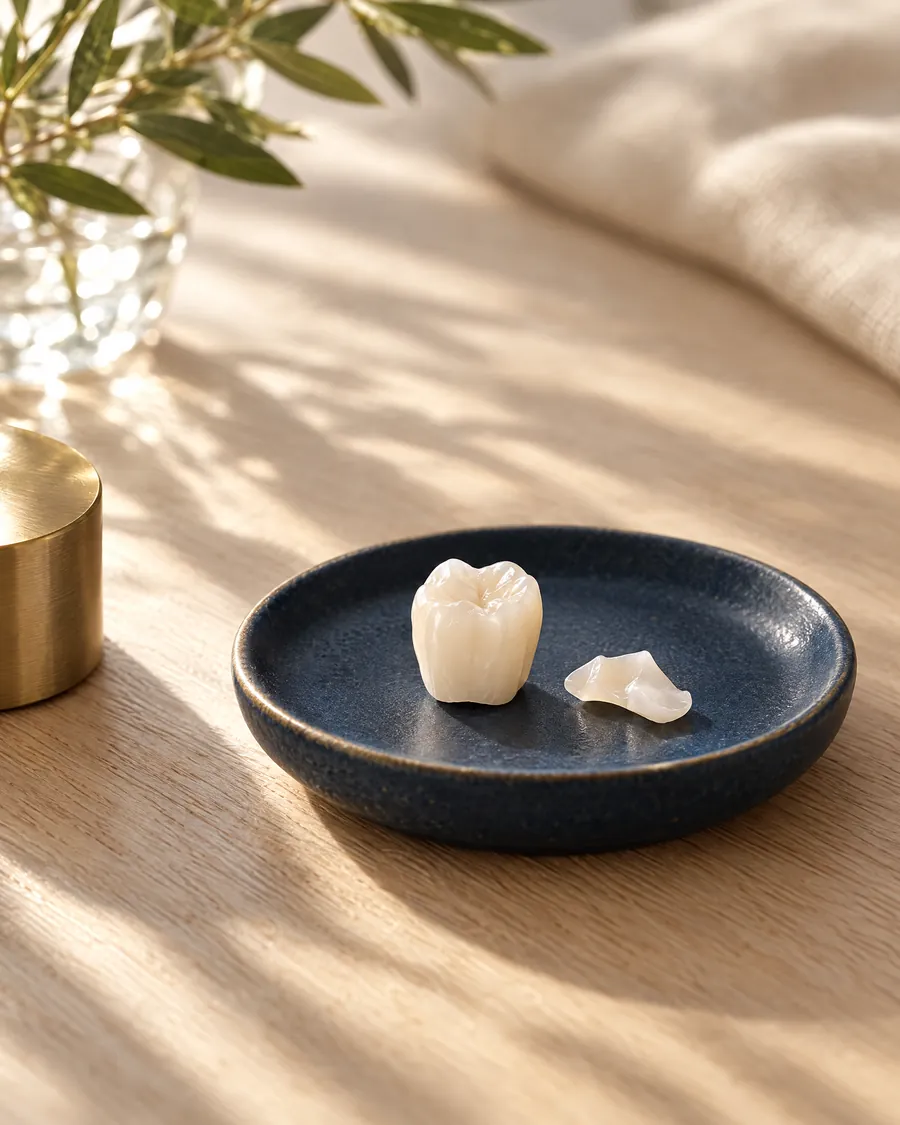
In a dead tooth, the pulp has died, the fine tissue of nerves and blood vessels inside it. The tooth itself is still firmly anchored in the jaw. You can often recognise it because it turns greyer or darker, no longer reacts to cold, or is sensitive when you bite. Sometimes you notice nothing at all. In most cases it can stay: a root canal treatment removes the dead tissue, and your own tooth is kept.
Updated: 14 November 2026
- What has died is the pulp, not the whole tooth.
- It should be treated even without pain.
- With a root canal treatment it usually stays for many years.
How a tooth dies
- Deep decay. Bacteria reach the pulp, it becomes inflamed and dies.
- A crack or a leaking filling. This also lets bacteria find their way inside.
- An accident. A blow to the tooth can cut off the blood supply to the pulp. The consequences sometimes only show years later. By then, many people barely remember the fall.
How you notice it
- The tooth turns greyer, more yellow or darker than its neighbours.
- It no longer reacts to cold.
- It feels pressure when you chew, or it feels slightly too high.
- A small blister appears on the gum. Read more in “Gum boil (dental fistula): what is behind it?”.
- Often you notice nothing. Then it shows up at a check-up, in a cold test or on an X-ray.
“It doesn't hurt. Can't I just leave it?”
Understandable, but waiting does not help the tooth. Bacteria settle in the dead tissue. The inflammation spreads into the bone at the root tip, usually without you feeling anything, and it can flare up at any time. Treated early, the procedure is smaller and the outlook for the tooth is better.
Can a dead tooth stay?
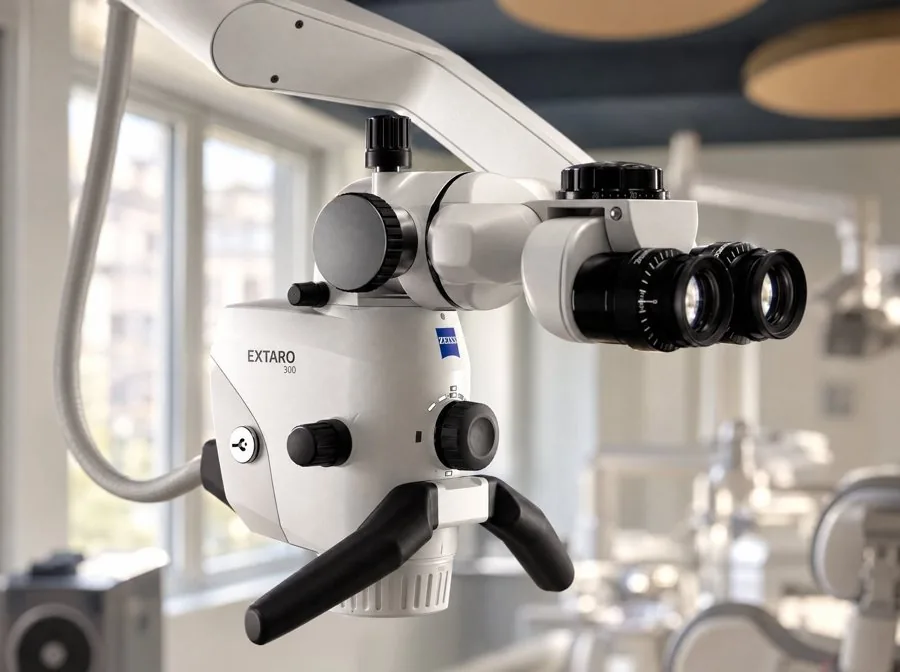
In most cases, yes. During the root canal treatment we remove the dead tissue, clean the canals under the microscope and seal them tightly. About 9 in 10 teeth are kept long term this way. Sometimes the honest answer is that removing the tooth is the better choice, for example with a vertical crack in the root. Then you know why. Read more in “Save or extract a tooth? What speaks for saving it”.
Has a tooth turned darker? In a “Consultation & treatment plan” appointment we find the cause and show you what we see.
Book a consultationIs a dead tooth bad for the body?
According to current knowledge, a carefully root-treated tooth without inflammation is no risk to your health. An untreated one is different: an inflammation at the root tip should be treated, like any other inflammation.
Will the tooth turn light again?
Often, yes. After the root canal treatment, a dark tooth can be whitened from the inside: a whitening agent is placed inside the tooth for a few days and renewed if needed. The tooth structure is preserved. If that is not enough, a ceramic veneer or crown matches the colour.
Is a dead tooth more brittle?
The root canal treatment itself does not weaken the tooth. What weakens it is the structure already lost to decay or old fillings. That is why we protect it afterwards, depending on how much remains often with a ceramic partial crown or crown. Read more in “When does a tooth need a crown?”.