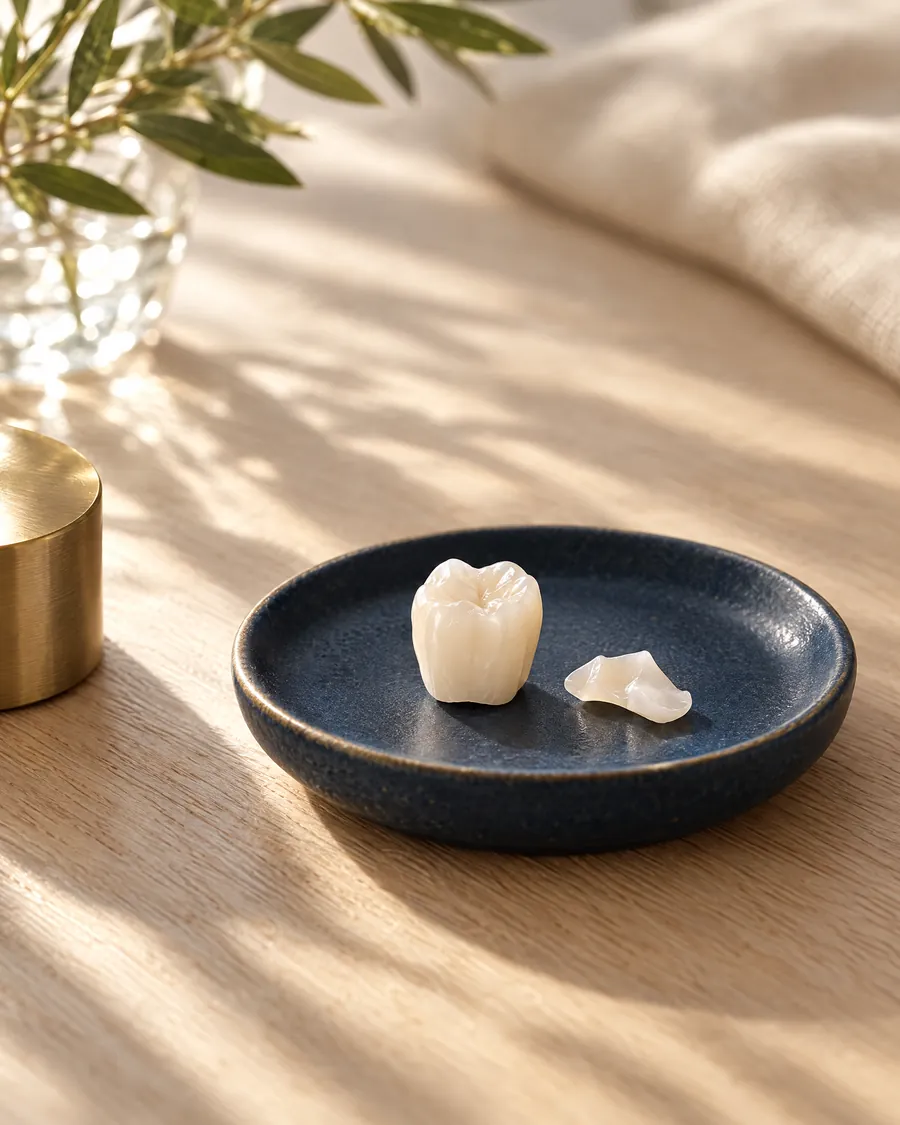
For small and medium-sized defects, composite is the first choice today: tooth-coloured, placed in one session, and hardly any tooth structure is removed for it. If a lot of tooth is missing, ceramic as an inlay or onlay usually lasts longer. We do not use amalgam.
Updated: 14 November 2026
- Small to medium defect: composite.
- Large defect or weakened cusp: ceramic.
- The size of the defect decides which filling fits, not fashion.
The comparison
| Composite | Ceramic (inlay, onlay) | Amalgam | |
|---|---|---|---|
| Appearance | tooth-coloured | tooth-coloured, very colour-stable | silver-grey |
| Sessions | one | usually two | one |
| Tooth structure | preserved, the filling is bonded | slightly more preparation | more removal, held mechanically |
| Suitable for | small and medium defects | large defects, weakened cusps, after a root canal treatment | not used in our practice |
What durability depends on
On three things: the size of the defect, how dry the tooth was during bonding, and the care afterwards. That is why we place composite fillings in layers and, where it makes sense, under a rubber dam.
“Does a white filling last as long as amalgam?”
For small and medium defects, yes, if it is bonded carefully. With very large defects, composite reaches its limits. Then ceramic is the better way.
Which filling suits your tooth, we see at the dental check-up.
Book a dental check-upAnd old amalgam fillings?
A tight amalgam filling that causes no problems can stay. When replacing it is worthwhile, you can read in “Replacing old amalgam fillings?”.