Root canal treatment in Zürich-EngeFor the tooth
others have given up on.

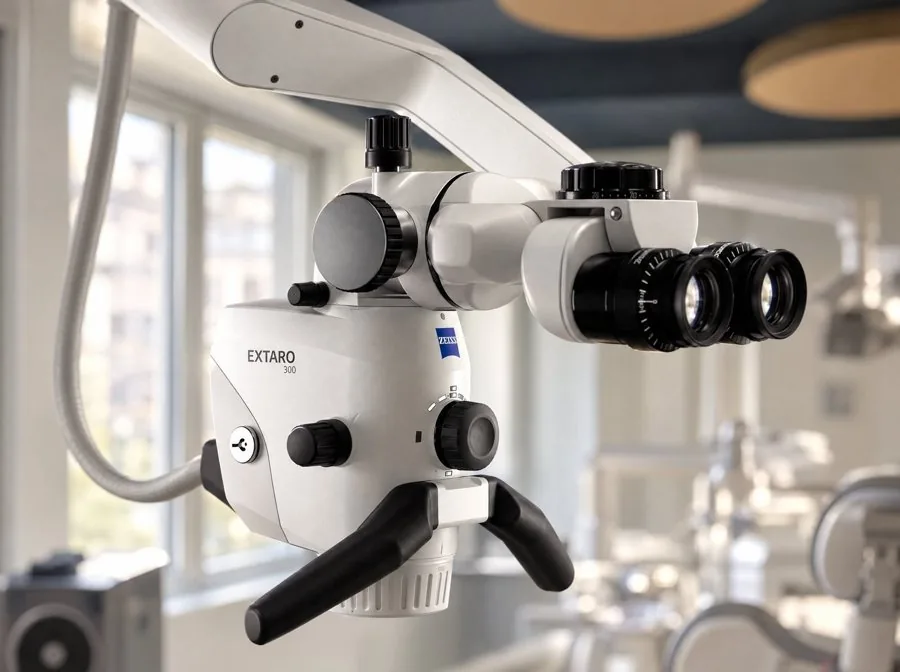
Root canal treatment under the microscope in Zürich-Enge: under up to 25 times magnification we find canals that stay hidden to the naked eye, clean them completely and seal them tightly. Usually in one or two sessions, with minimal discomfort. Your own tooth stays.

Around 1,500 root canal treatments a yearMSc EndodonticsAt the microscope since 2013

Treatment under the surgical microscope at Zahnlounge
Your concern

Sound familiar?

Pain
“The tooth throbs, especially at night. It reacts strongly to hot and cold.”
Apprehension
“I am apprehensive about a root canal. You hear so many stories.”
Back again
“The tooth has been treated before. Now it is acting up again.”
Extraction
“I was told the tooth has to go. I would like to keep it.”

This is exactly what root canal treatment under the microscope is for.

How we work

How we preserve your tooth.

A clearly guided sequence, explained step by step.

Surgical microscope for root canal treatment at Zahnlounge
01

Understand

We examine the tooth with digital X-rays and under the microscope. You receive a clear assessment of how well the tooth can be preserved, and a written treatment plan.

02

Numb

Treatment is carried out under local anaesthetic. You feel touch but no pain, and we work at your pace.

03

Clean

Under up to 25 times magnification we find all the canals, including the fine and hidden ones, and clean them completely.

04

Seal and rebuild

The canals are filled tightly and the tooth is sealed securely. Then we discuss how to protect it for the long term, for example with a ceramic restoration.

Why Zahnlounge

Preserving teeth is at the centre of what we do.

Nothing can fully replace your own tooth.

Under the microscope

What you can see, you can treat. Magnification reveals fine canals, cracks and remnants of earlier fillings.

Experience

Around 1,500 root canal treatments a year, many of them on teeth that had already been given up on elsewhere.

The second chance

Retreatments are a fixed part of our work: treating a tooth again when its earlier root canal treatment did not hold.

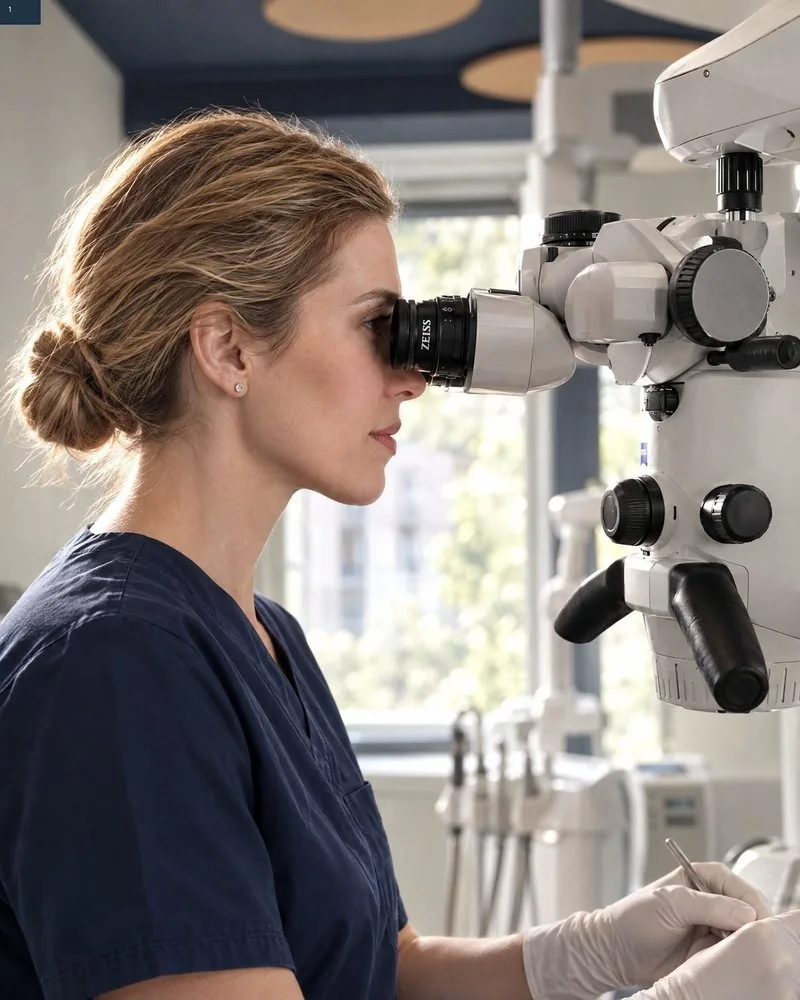
Dr. Dominika Kleinert-Baltsios, dentist, MSc Endodontics, at Zahnlounge Zürich-Enge
Your dentist

Dr. Dominika Kleinert-Baltsios

Dentist, MSc Endodontics

Dr. Dominika Kleinert-Baltsios holds a Master of Science in Endodontics and has worked under the microscope since 2013. Preserving your own tooth is her focus. She speaks German, Polish and English.

The lounge at Zahnlounge Zürich-Enge
Reviews

What our patients say.

“Dr. Kleinert-Baltsios is extremely competent, explains treatment options and the related costs transparently, and treats with such care and empathy that you feel in very good hands.”
Google · N. W. · translated
“A further treatment with anaesthesia was surprisingly painless too. The dentist and her assistant took great care of me, and I am really happy with the result.”
Google · E. P. · translated
“I felt very much at ease with Ms Kleinert. The consultation was very clear and the treatment painless.”
Google · A. H. · translated

More than 120 reviews on Google →

Good to know

Clarity before you decide.

What people ask us about root canal treatment.

01Does a root canal treatment hurt?⌄
As a rule, no. Treatment is carried out under local anaesthetic: you feel touch but no pain. Often the pain you came with eases after the first session. In the days afterwards the tooth may still be sensitive when chewing.
02How many appointments does it take?⌄
Usually one or two sessions. For a retreatment or a severe inflammation we plan more time. We set out the sequence for your tooth in the treatment plan.
03What is a retreatment, and when is it worthwhile?⌄
A retreatment is a renewed root canal treatment on a tooth that has been treated before and is causing trouble again. It is worthwhile when root and bone are stable enough and the tooth can be restored well afterwards. We check this under the microscope and tell you openly how we assess the prospects.
04Can a tooth be saved that another dentist wants to extract?⌄
Often, yes. Dr. Dominika Kleinert-Baltsios, MSc Endodontics, examines every such tooth under the microscope before a decision on extraction is made. You receive an honest prognosis and both paths in writing. Sometimes the answer is that extraction is the better choice. Then you know why.

Answers by Dr. Dominika Kleinert-Baltsios, MSc Endodontics
Related topicsSecond opinionToothache