Ceramic crowns and inlays in Zürich-EngeAs strong as before.
As natural as your own tooth.

Crowns, inlays and bridges in Zürich-Enge, made of metal-free ceramic. Ceramic looks like a natural tooth: in colour, translucency and surface. It is intended for teeth that have lost more of their structure. A digital scan replaces the impression. We preserve as much of your own tooth as possible and replace only what is missing.

Metal-free ceramicDigital scan instead of an impressionEnglish spoken

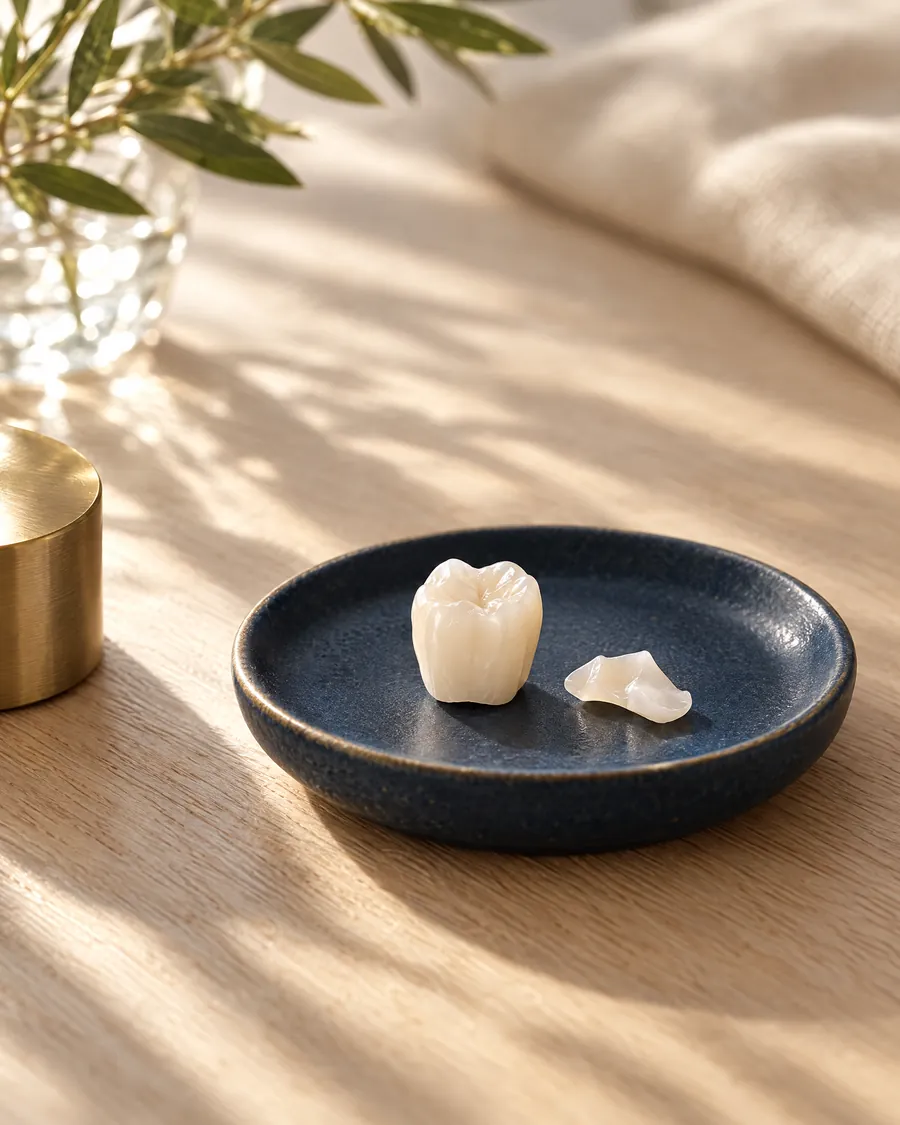
Ceramic crown and inlay in a dark blue bowl
Your concern

Sound familiar?

Filling
“My old filling has grown large, and now a piece of tooth has broken off.”
Crown
“My crown is showing its age. You can see a dark line at the edge.”
Gap
“I am missing a tooth, and I switch to the other side when I chew.”
Metal
“I would rather not have metal in my mouth any more.”

This is exactly what ceramic restorations are for.

How we work

How your new tooth is made.

You know what is planned before the first step.

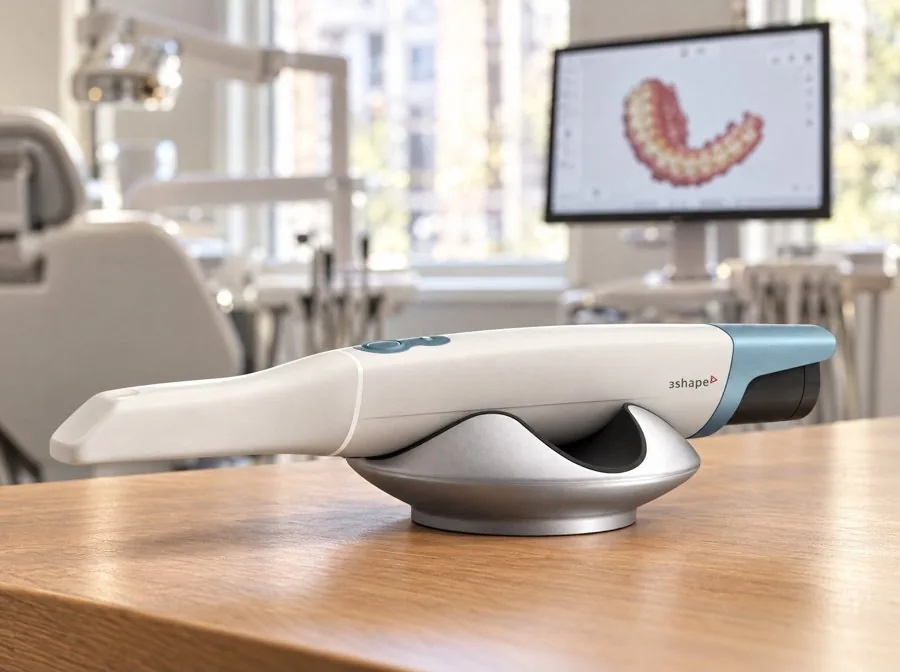
Intraoral scanner for digital impressions at Zahnlounge
01

Examine and plan

We examine the tooth with digital X-rays and under magnification. You see on screen what we see and receive a written treatment plan.

02

Prepare gently

The tooth is prepared so that as much healthy structure as possible is preserved. Under local anaesthetic, carefully and at your pace.

03

Take a digital impression

A scan replaces the impression. The ceramic is made individually for you, matching your neighbouring teeth in shape and colour. Until it is fitted, a temporary restoration protects the tooth if needed.

04

Fit and check

The ceramic is permanently attached and finely adjusted. At a check-up we check your bite and the fit.

Why Zahnlounge

Replace only what is missing.

Nothing fully replaces your own tooth. That is why, with us, a restoration starts with the question of what can be preserved.

Preserve first, then replace

Often an inlay or partial crown is enough instead of a full crown. We choose the smallest restoration that lasts.

Metal-free

All-ceramic contains no metal. It is colour-stable, and no dark line forms at the gum line.

Precision under magnification

We work under magnification. A tight edge protects the tooth beneath it for many years.

Dr. Dominika Kleinert-Baltsios, dentist, MSc Endodontics, at Zahnlounge Zürich-Enge
Your dentist

Dr. Dominika Kleinert-Baltsios

Dentist, MSc Endodontics

Dr. Dominika Kleinert-Baltsios combines saving teeth with a precise eye for aesthetics. She has worked under magnification since 2013, with around 600 ceramic restorations a year: inlays, onlays, crowns and bridges. She speaks German, Polish and English.

The lounge at Zahnlounge Zürich-Enge
Reviews

What our patients say.

“She works incredibly professionally, carefully and at the same time very gently. I felt very much at ease, and she took a great deal of time for me.”
Google · F. P. · translated
“Dr. Kleinert-Baltsios is extremely competent, explains treatment options and the related costs transparently, and treats with such care and empathy that you feel in very good hands.”
Google · N. W. · translated

More than 120 reviews on Google →

Good to know

Clarity before you decide.

What people ask us about crowns and inlays.

01Crown, partial crown or inlay: what is the difference?⌄
An inlay fills a defect within the tooth. A partial crown also replaces one or more cusps. A crown covers the whole visible tooth. Which form suits depends on how much healthy structure remains. We choose the smallest restoration that lasts.
02How long do ceramic restorations last?⌄
With good care and regular check-ups, usually many years, often ten years or longer. What matters is a tight edge, a balanced bite and care at home. If you grind at night, a splint protects the ceramic.
03How many appointments does it take?⌄
For a crown or an inlay, usually two: at the first we prepare and scan the tooth, at the second we fit the ceramic. You receive the exact procedure with all appointments in advance with your treatment plan.
04What if a tooth is missing completely?⌄
A gap can be closed with a ceramic bridge or an implant. Which path suits you depends on the neighbouring teeth and the bone. At your consultation, we show you both paths, with the effort and time involved.
05Filling or ceramic?⌄
A filling is enough for small defects and small areas of decay. We use ceramic for extensive defects, large areas of decay, after root canal treatment and for weakened cusps.
Read more in our guide: “When does a tooth need a crown?”Read more in our guide: “Replacing old amalgam fillings?”Read more in our guide: “Dental bridge: when does it make sense?”

Questions beforehand? Send us a WhatsApp message or give us a call.

Related topicsVeneersRoot canal treatmentNight guard