A retreatment is a second root canal treatment on a tooth that has been treated before and is causing problems again. It is worth it if the root and bone are stable enough and the tooth can be well restored afterwards. Then you keep your own tooth, and a gap never arises.
Updated: 9 November 2026
Why a root canal treatment does not last
Usually there are bacteria in the tooth again. There are a few typical reasons:
- A fine canal was not found during the first treatment.
- A canal was not cleaned and filled along its full length.
- The filling or crown above it has started to leak.
- The tooth has a crack.
This is no criticism of the first treatment. Root canals are often finely branched and barely visible to the naked eye.
How you notice it
- The tooth hurts when you chew or bite down.
- The gum above the root swells, or a small blister forms that occasionally weeps.
- Sometimes there are no symptoms at all, and only the X-ray shows inflammation at the root tip.
When it is worth it, and when not
A retreatment has a good outlook if the root has no vertical crack, the bone around the tooth is stable and enough tooth remains for a tight restoration. If one of these is missing, extraction is often the better path. We say so openly, and you know why. Read more in “Save or extract a tooth?”.
How a retreatment works
- Numb: treatment is under local anaesthetic. We work at your pace.
- Open: the old root filling is carefully removed.
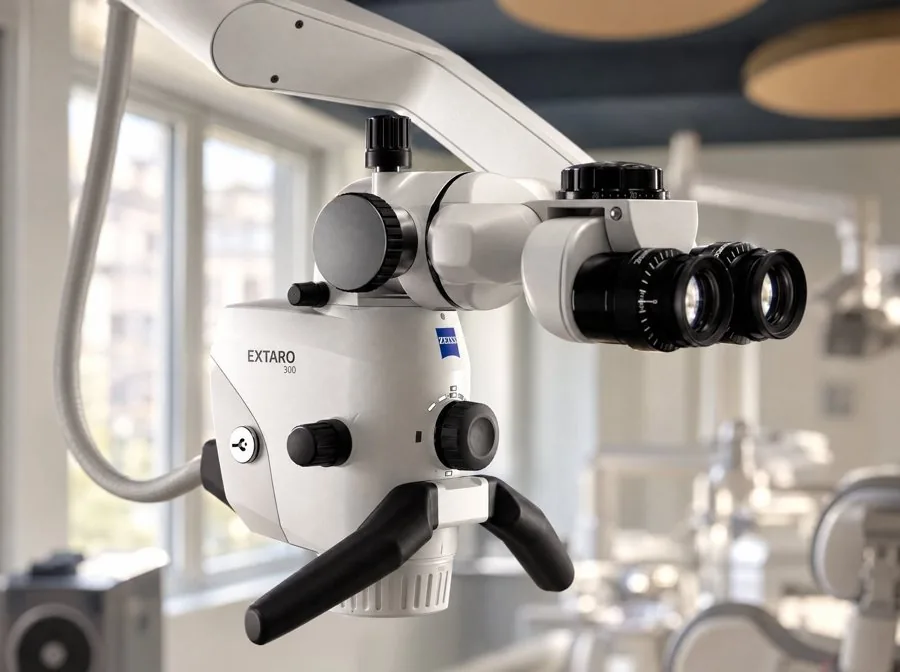
- Find and clean: under up to 25-fold magnification we find even fine and hidden canals and clean them completely.
- Seal and rebuild: the canals are filled tightly and the tooth is sealed securely. Then we discuss the permanent restoration, often a ceramic partial crown or crown.
A retreatment takes longer than a first root canal treatment. Often there are two sessions, with a medicinal dressing protecting the tooth in between. We set out the procedure for your tooth in the treatment plan.
Does a retreatment hurt?
Usually not. You feel touch, but no pain. In the days afterwards, the tooth may still be sensitive when you chew.
And the alternative?
If the tooth is extracted, a bridge or an implant closes the gap. Both are proven. But they mean more effort and time until the final replacement is in place, and for a bridge the neighbouring teeth are reshaped. Where your own tooth has a good outlook, retreatment is therefore usually the gentler path.