Brushing properly means: twice a day for at least two minutes, with a soft brush, little pressure and fluoride toothpaste, plus cleaning between your teeth once a day. Most mistakes are not about how often, but about how. We see seven of them in the practice particularly often. All of them are easy to fix.
Updated: 14 November 2026
- Gentle rather than hard. Pressure does harm, it does not clean better.
- Two minutes, in a fixed order.
- The spaces between the teeth are part of it, once a day.
The seven mistakes
01 Too much pressure. Scrubbing does not clean more thoroughly, it irritates the gums and over time can expose the necks of the teeth. Hold the brush like a pen, not like a hammer. Read more in “Receding gums: what causes it, and what helps?”.
02 Too short. Two minutes are the minimum, with any brush. They feel quickly reached, but measured, people are often only halfway. A timer helps.
03 No fixed order. If you start somewhere different each time, you always forget the same areas: the inner sides and the back molars. Always follow the same path, first outside, then inside, then the chewing surfaces.
04 Skipping the gum line. Plaque sits mainly where tooth meets gum. Place the brush at an angle on this edge and brush with small movements.
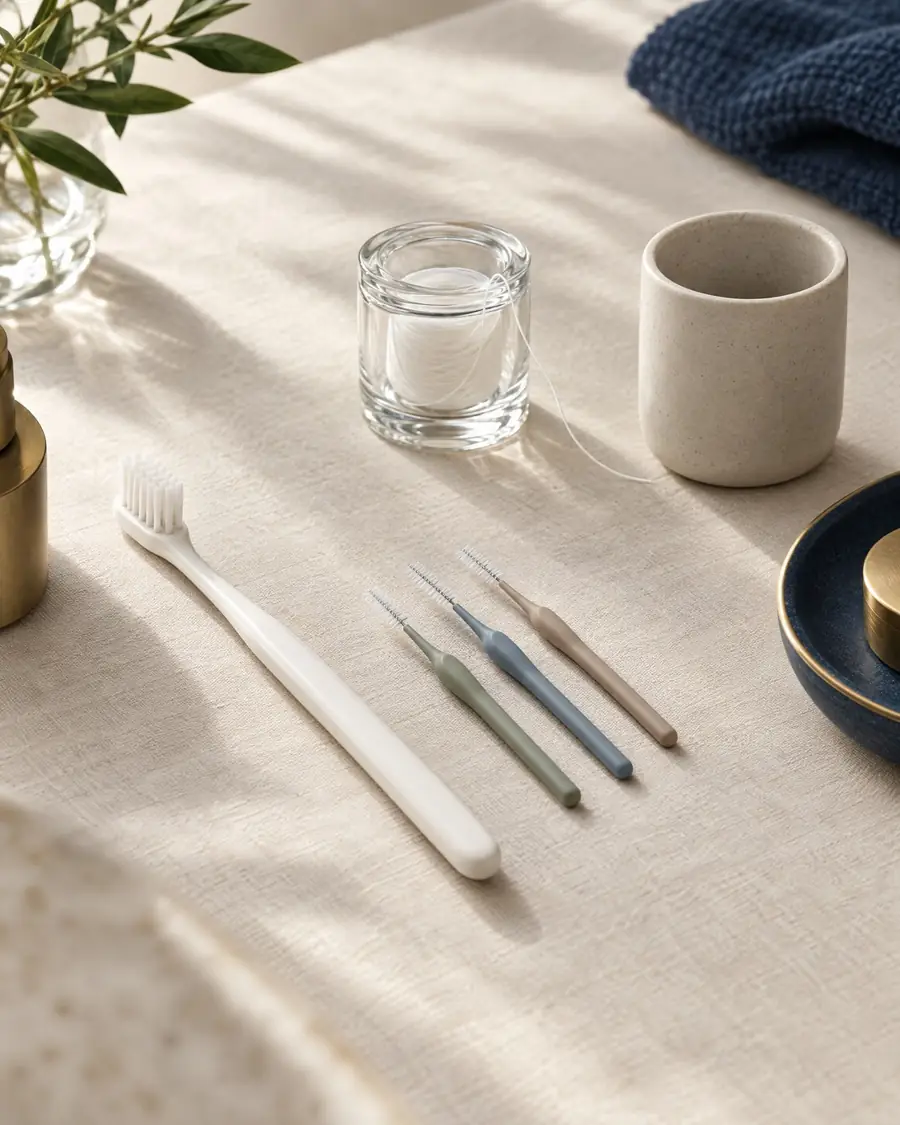
05 Forgetting the spaces between the teeth. The brush does not reach them. Interdental brushes in the right size are the best studied. Floss is the solution where a brush does not fit through. Read more in “Floss or interdental brushes?”.
06 Rinsing hard after brushing. That washes the fluoride straight away. Spit out the toothpaste and rinse only a little.
07 Keeping the brush too long. Splayed bristles clean less well. Change the brush or brush head every three months, or earlier if the bristles splay.
The minimum, twice a day. With any brush.
German S3 guideline on mechanical biofilm management, 2018“I brush three times a day. Why do I still get tartar?”
Because it is about how, not how often. Plaque that stays in a hard-to-reach spot hardens into tartar within days, and no brush removes that any more. On top of that comes your disposition: some people build up tartar faster than others. Read more in “Removing tartar: can you do it at home?”.
And waiting after eating?
For a long time, the advice was to wait half an hour after acidic food. Newer analyses show no benefit of waiting for human enamel. A fluoride toothpaste, a soft brush and little pressure matter more. One exception: after vomiting or acid reflux, rinse with water first and brush later.
Manual or electric toothbrush?
Both clean well if the technique is right. Electric brushes have a slight advantage in studies and take care of the movement and the timing for you. Read more in “Electric toothbrush: sonic or oscillating?”.
During dental hygiene we show you which areas your brush misses, and practise the technique with you.
Book dental hygiene