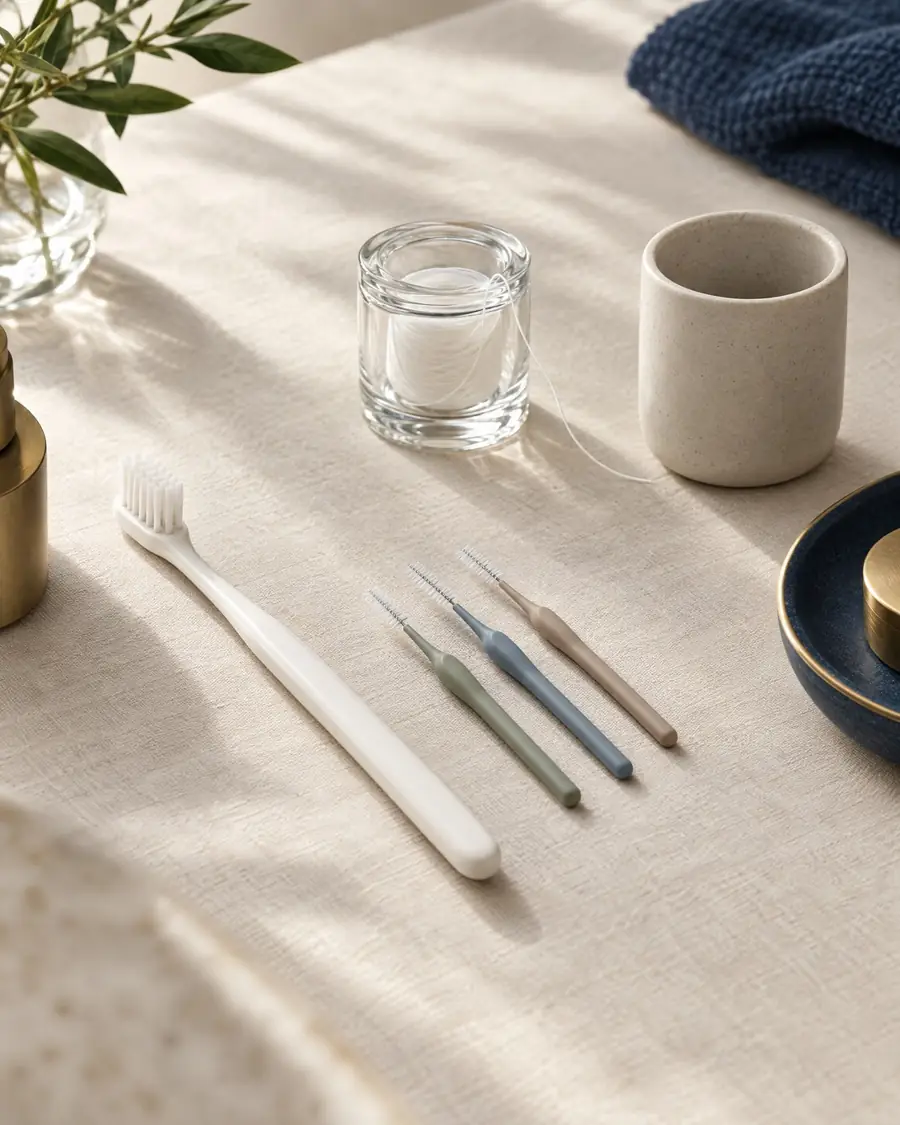
Where the spaces between your teeth allow it, interdental brushes are usually the better choice. They clean thoroughly and many people find them easier to use. A 2019 review by the Cochrane Collaboration found indications that they reduce gum inflammation more than floss. Floss is the right choice where teeth are so close together that no brush fits through. Most important is that you clean between your teeth once a day, because that is where decay and gum inflammation most often begin.
Updated: 9 November 2026
Why the spaces between your teeth matter
A toothbrush cleans the outer, inner and biting surfaces. It only reaches the edges of the spaces between your teeth. That is exactly where the plaque collects that turns into tartar and irritates the gums. People who clean between their teeth every day have healthier gums and less tartar.
Using interdental brushes properly
- The right size: the brush should slide in without force and noticeably touch the tooth surfaces. Many people need two or three sizes, smaller at the front than at the back.
- Insert it straight, just above the gum, and move it back and forth a few times.
- Do not force it: if the brush does not go in, it is too big. Choose a smaller size, or use floss here.
- Replace it as soon as the bristles splay or the wire is bent.
Using floss properly
Guide the floss carefully between your teeth with a gentle sawing motion. Curve it around one tooth like a C, slide it to just below the gum line and back up, then do the same on the neighbouring tooth. Use a fresh section for each space.
If your gums bleed at first
That is often a sign that the gum is inflamed at that spot, and no reason to stop. Keep cleaning gently. Usually the bleeding eases after a week or two, as the gum heals. If it continues for longer, have it checked.
And toothpicks, rubber picks, water flossers?
Rubber picks are handy on the go. A water flosser rinses out food debris but removes firm plaque less well than a brush. Read more in “Water flosser: does it replace floss?”.