No, tartar cannot be removed safely at home. It is hardened plaque, firmly attached to the tooth, and often sits at and below the gum line. Scalers bought online and home remedies such as baking soda or lemon are more likely to injure your gums and enamel than to remove it. It is removed gently and thoroughly at a dental hygiene appointment, the professional teeth cleaning. At home you can do a lot to stop as much new tartar forming.
Updated: 9 November 2026
What tartar is and how it forms
Every day a soft layer of bacteria, the biofilm, forms on your teeth. If it is not brushed away completely, minerals from your saliva settle in it and it hardens into tartar. How quickly this happens varies from person to person.
Tartar forms mainly where saliva flows from the salivary glands: on the inside of the lower front teeth and on the upper back teeth. Above the gum it is yellowish to brownish, below the gum line it is often darker and harder.
Why it should go
New bacteria cling particularly well to its rough surface. Your gums react with inflammation: they turn red, swell and bleed when you brush. If this continues, it can lead to periodontitis, where gums and bone recede. So tartar is about more than appearance. What helps with irritated gums is explained in “Gum inflammation (gingivitis): what helps?”.
Why home remedies and scalers are not a good idea
- Tartar scalers bought online: without practice and without a clear view, it is easy to slip and injure your gum. And you cannot reach below the gum line, where tartar does the most harm.
- Baking soda, bicarbonate of soda, salt: they act like sandpaper. Over weeks they roughen the enamel, and plaque and stains cling even more easily to a rough surface.
- Vinegar, lemon, apple cider vinegar: acid dissolves not only limescale but also enamel.
- Tartar-control toothpaste: it can help less new tartar to form. It does not dissolve existing tartar.
How we remove tartar at a dental hygiene appointment
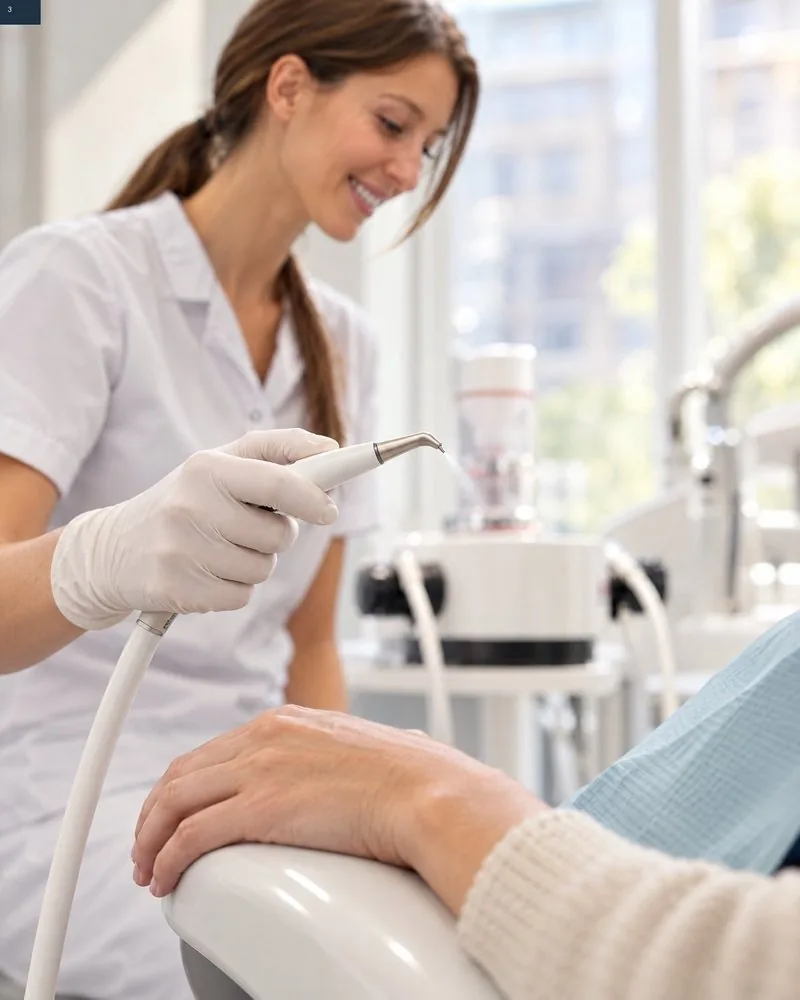
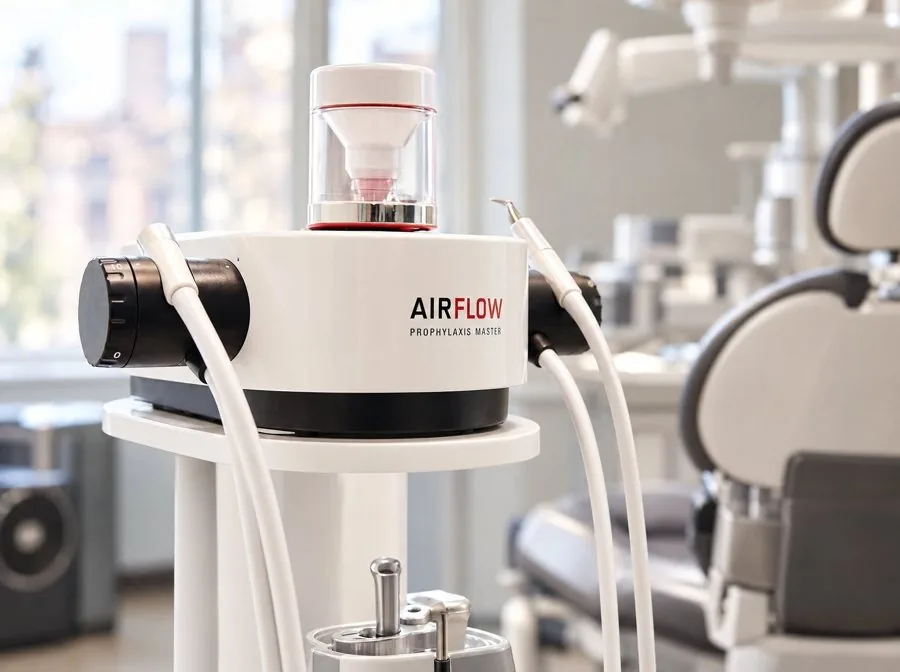
We work with Guided Biofilm Therapy, the GBT system by EMS, and are certified by EMS. First, a warm powder-and-water jet removes biofilm, plaque and stains from every tooth and every surface, without pressure. We then remove any remaining tartar precisely with ultrasound and finish by hand, individually and gently, at and below the gum line. It feels pleasantly warm and is painless. Allow around an hour.
Afterwards your teeth feel smooth and look brighter. And your gums get the chance to settle again.
So that less new tartar forms
- Brush twice a day for two minutes with fluoride toothpaste.
- Clean between your teeth once a day, with interdental brushes or floss.
- Make a point of brushing the inside of your lower front teeth.
- Have a dental hygiene appointment regularly, every six months for most people. If you build up tartar quickly, shorter intervals work well. We will discuss the right rhythm for you at your appointment.