Teeth grinding and clenching are widespread: up to 16 out of 100 adults grind in their sleep, and up to 31 out of 100 clench during the day, often without noticing. Common triggers are tension and stress, as well as sleep disorders, alcohol, nicotine and some medications. Grinding can rarely be switched off completely, but it can be brought well under control: an individually adjusted splint protects your teeth at night, and if you know your habits, you can take the strain off your jaw and muscles during the day too. Have it checked if your teeth are flattening, edges are chipping or you wake up with a tense jaw.
Updated: 9 November 2026
At night and during the day
- In your sleep: the chewing muscles work rhythmically or clench for long periods, usually unnoticed. Often the person sleeping next to you hears it first.
- During the day: your teeth rest on each other and your jaw is tense, for example during focused work at a screen or in traffic. At rest, your teeth should barely touch, only when chewing and swallowing.
How you can tell that you grind
- a tense jaw or tired chewing muscles in the morning
- headache or neck pain on waking
- sensitive teeth
- flattened, shorter-looking or chipped tooth edges
- fillings or crowns that break
- strong chewing muscles, the face looks more angular
At a check-up, we see the traces on your teeth, often before you notice anything yourself.
Where it comes from
Usually several reasons come together:
- tension, stress and worries, especially with clenching during the day
- sleep disorders, including pauses in breathing during sleep
- alcohol, nicotine and drugs
- some medications, for example certain antidepressants or ADHD medication
- heartburn
If you have started a new medication and have been grinding since, talk to your doctor about it. Do not stop taking it on your own.
According to current knowledge, permanently changing the bite, for example by grinding down teeth or with new crowns, does not stop grinding. That is why we focus on protection and relief.
What helps
- Become aware of it. People who clench during the day often do not notice. Small reminders help, for example a coloured dot on your screen: each time you see it, check whether your teeth are resting loosely apart. A phrase to remember: lips together, teeth apart, tongue relaxed.
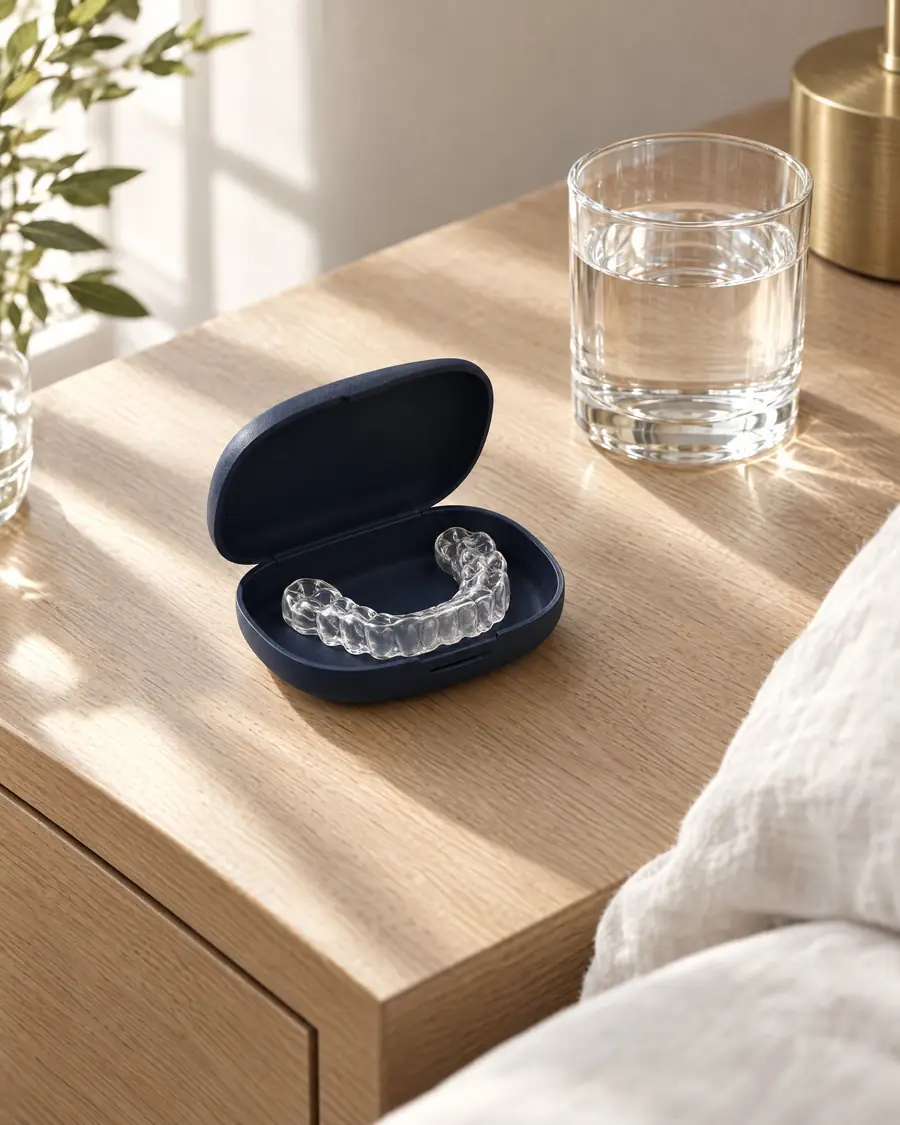
- Protect your teeth at night. A Michigan splint made of firm acrylic protects against wear and relieves the chewing muscles. It is made from a digital scan and precisely adjusted to your bite. What sets it apart from a splint from the chemist is explained in “Night guard: online or from the dentist?”.
- Lower the tension. Progressive muscle relaxation, exercise and enough sleep lower the baseline tension. With severe symptoms, physiotherapy loosens the chewing muscles.
- Tackle the triggers. Cut down on alcohol in the evening and nicotine. Have loud snoring, pauses in breathing and daytime tiredness checked by a doctor.
What the splint can and cannot do
The splint reliably protects your teeth. It does not always prevent the grinding itself. But many symptoms in the jaw and head ease with it. That is why we combine the splint with a look at your everyday life. If your jaw joint also hurts or clicks, read on in “Jaw, head and neck pain: what is TMD?”.