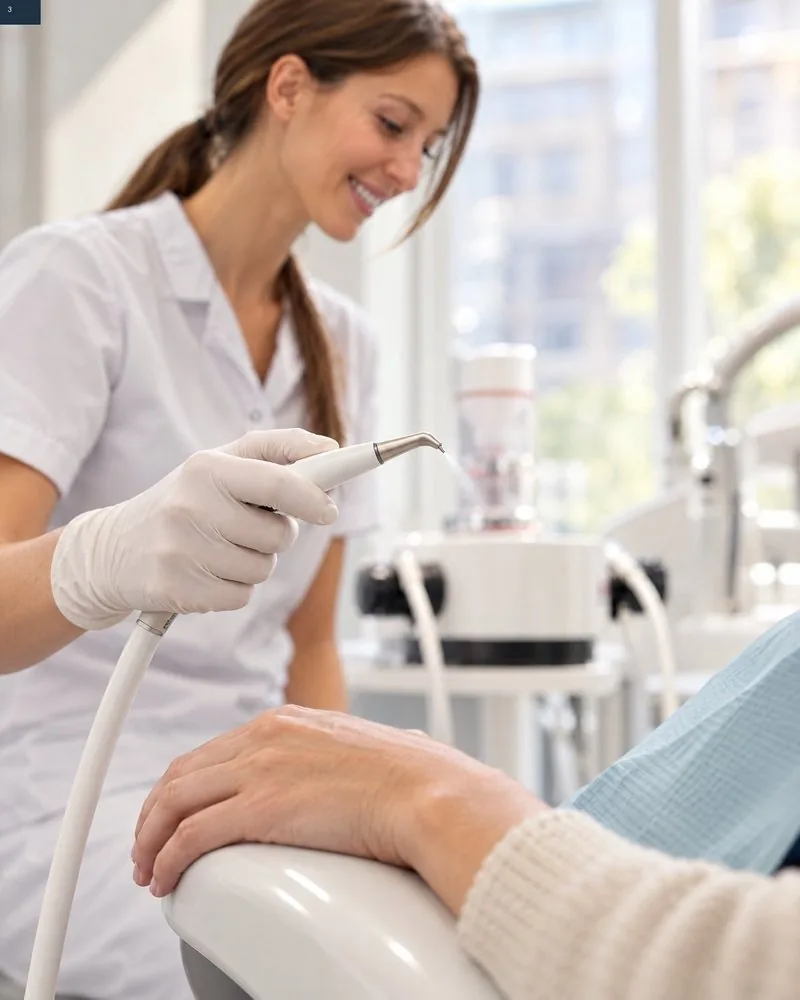
A splint from the chemist or from the internet can protect your teeth from wear for a while. But it is not adjusted to your bite, and nobody clarifies why you grind and where tension or headaches come from. A Michigan splint from the dentist is made of firm acrylic, made from a digital scan and finely adjusted to your bite. Before that comes a functional analysis that looks at teeth, chewing muscles and jaw joint together.
Updated: 9 November 2026
Three kinds of splint
- From the chemist, to fit yourself: soft plastic that you warm in hot water and press onto your teeth. Quickly available, but it only fits roughly, tends to be thick and shifts easily.
- Online from your own impression: you take an impression at home and send it in. The splint sits better on the teeth. But nobody checks in your mouth how the upper and lower jaw meet.
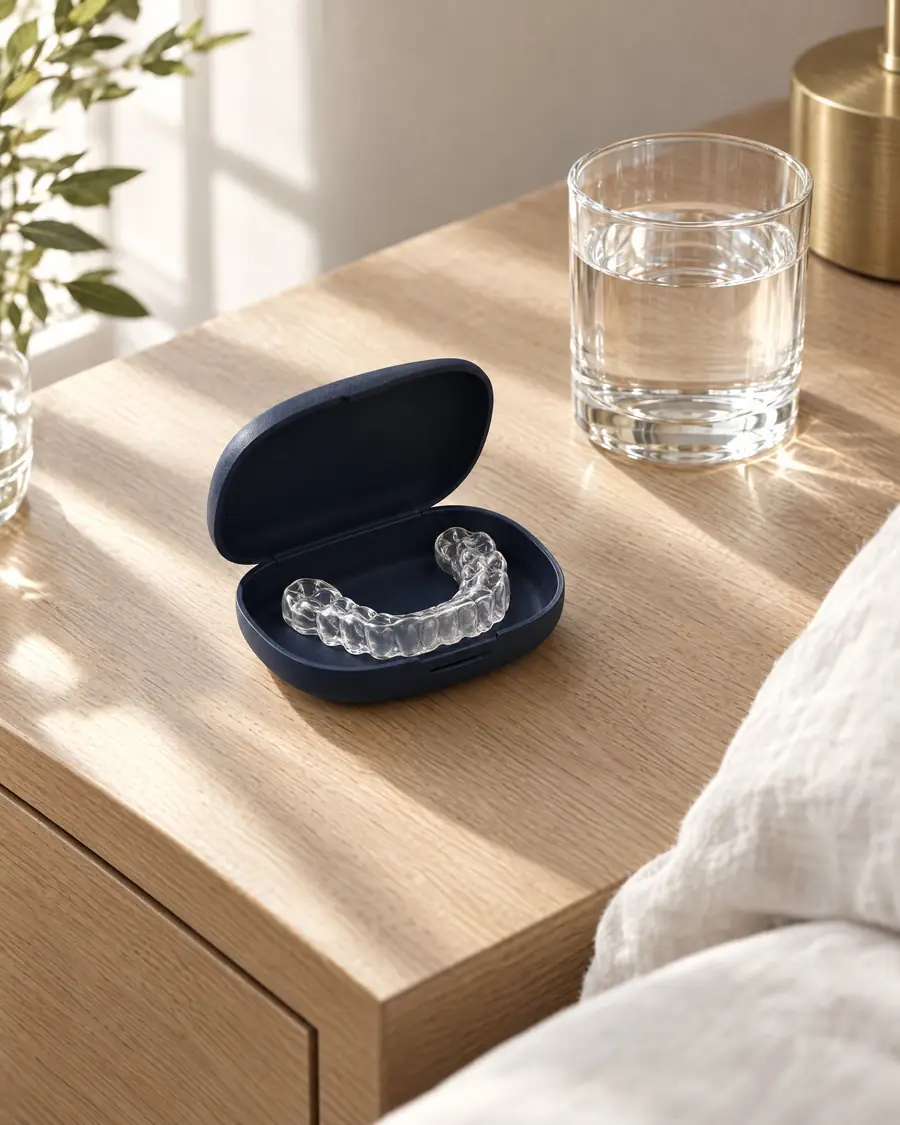
- A Michigan splint from the dentist: firm, clear acrylic, made from a digital scan, without an impression. We fit it precisely in your mouth, adjust it finely and check at a follow-up how you are getting on with it.
Why the adjustment to your bite matters
Grinding and clenching create large forces. A Michigan splint is adjusted so that your teeth rest evenly on it and the lower jaw can glide freely. That distributes the forces and relieves the chewing muscles. A soft splint without adjustment, by contrast, invites some people to chew on it, and uneven contact can strain the bite over time.
How you can tell that you grind
Typical signs are a tense jaw in the morning, headache or neck pain, sensitive teeth and flattened or chipped tooth edges. Often the person sleeping next to you notices first. At a check-up, we see the traces on your teeth.
When a simple splint works as a stopgap
For a few nights until your splint is ready, or as a spare when travelling, a simple splint can be enough. If edges are chipping, you wake up with pain in your jaw or head, or your jaw joint clicks, have it examined.
Does the grinding stop with the splint?
The splint protects your teeth and relieves the muscles, and many symptoms ease with it. The cause often lies in tension. That is why we look together at what else does you good.
How to care for your splint
Clean it in the morning with cold or lukewarm water and a soft brush, without toothpaste, which can roughen the acrylic. Keep it dry in its case and bring it to your check-up, so that we can check the fit and adjustment.