The three main disadvantages of veneers: if enamel is removed for a ceramic veneer, this cannot be undone. A veneer can chip or come loose, especially with heavy grinding. And it lasts a long time, but not forever: after ten years, around 95 in 100 ceramic veneers are intact, and at some point a replacement is due. All three points can be assessed before anything is done to the tooth.
Updated: 14 November 2026
- Enamel that has been removed does not grow back.
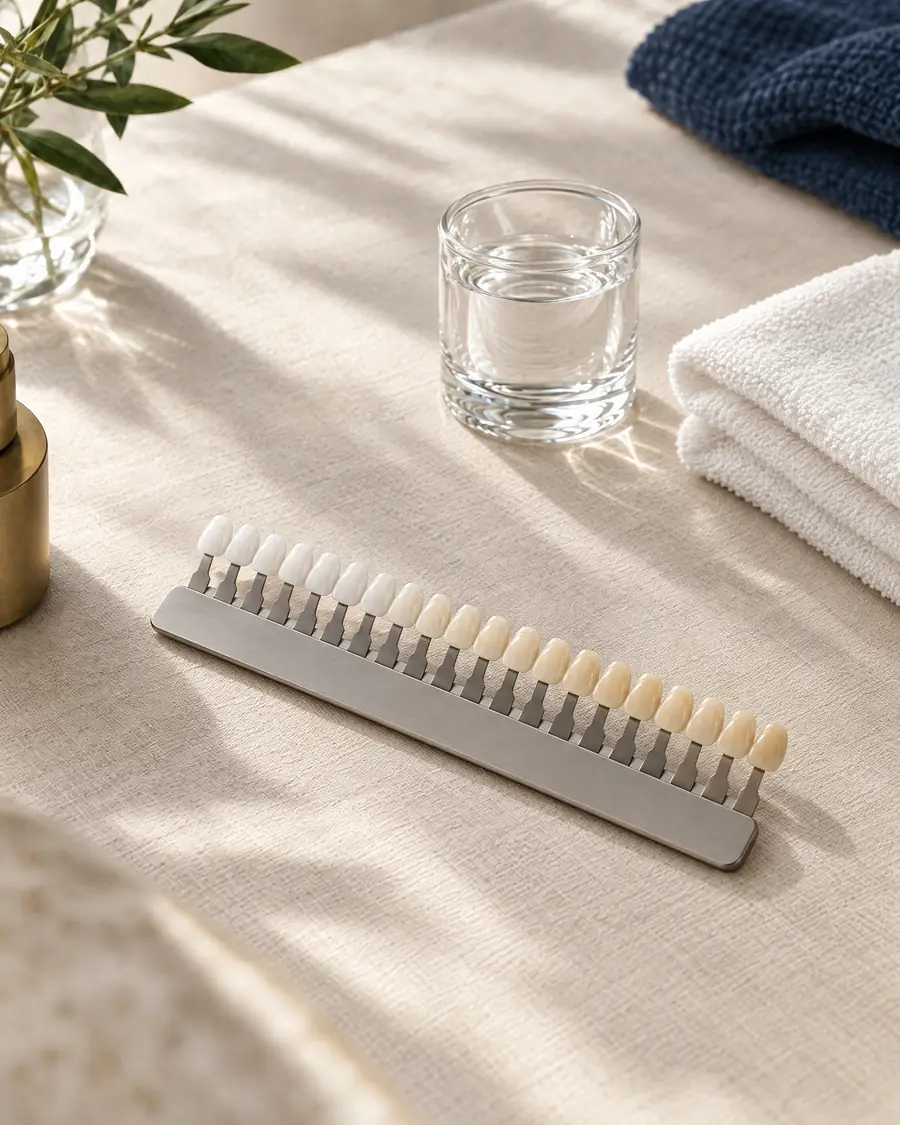
- Veneers cannot be whitened. The shade is chosen beforehand.
- If you grind your teeth, a night guard protects them.
All points at a glance
| Disadvantage | What lies behind it | What helps |
|---|---|---|
| Cannot be undone | For ceramic, a very thin reduction of the enamel is often enough. It remains | Preview in your mouth, you decide only afterwards. Sometimes no reduction is needed at all |
| Chipping or coming loose | the most common complication, especially with grinding | a night guard protects. Small damage can often be repaired |
| The shade stays as it is | ceramic and composite cannot be whitened | if you want lighter teeth, whiten them first |
| Replacement after many years | ceramic usually lasts ten to fifteen years, often longer | you plan for it from the start |
| Care at the gum line | the transition needs the same care as any tooth | dental hygiene and check-ups keep it healthy |
That is how many ceramic veneers are intact after ten years. An analysis of 25 studies with 6,500 veneers.
Alenezi and colleagues, Journal of Clinical Medicine, 2021Is the tooth ground down?
For a ceramic veneer, a very thin reduction of the enamel is often enough, a fraction of a millimetre. Sometimes no reduction is needed at all. Dr. Dominika Kleinert-Baltsios builds up composite veneers by hand directly on the tooth, without grinding. When which approach fits, you can read in “No-prep veneers: who are they for?”.
“I've seen pictures of teeth ground down to points. Will mine look like that?”
No. Those pictures show crowns, not veneers. For a crown, the tooth is reduced all the way round. A veneer only covers the front, and the reduction stays within the enamel, at 0.3 to 0.5 millimetres. Your tooth keeps its shape.
When veneers are not the right choice
- It is only about the colour. Then whitening brightens your own teeth.
- A single edge or a small gap bothers you. Then bonding is often the better choice. Read more in “Veneers or bonding: which suits when?”.
- Gums or teeth are not healthy. We treat decay and inflammation first.
- You grind heavily and do not want to wear a night guard.
We recommend veneers where they really make the difference.
Would you like to know what is possible for your teeth and what it involves? In a “Consultation & treatment plan” appointment you see the result in your mouth beforehand.
Book a consultationHow veneers last a long time
Most damage happens in the first years and through forces that can be avoided. What helps: a night guard, regular check-ups and dental hygiene, and care with hard foods on the biting edges. More on durability in “What are veneers?”.