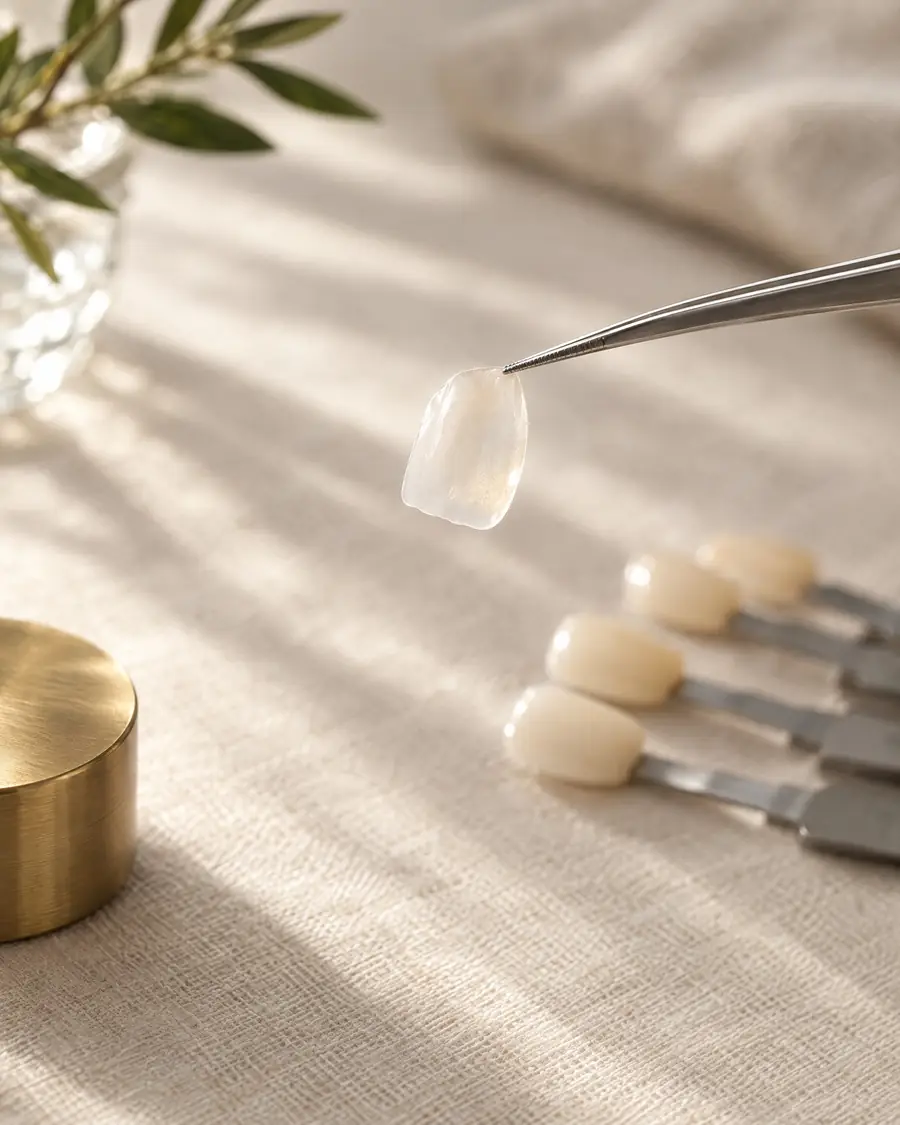
Bonding is suitable for small corrections to edges, gaps and shapes. Tooth-coloured resin is modelled directly on the tooth, in one session and without reshaping. Veneers are wafer-thin ceramic shells, individually made. They suit when the shape and colour of several teeth should change for the long term, and they usually last ten to fifteen years, often longer.
Updated: 9 November 2026
The difference at a glance
| Bonding | Veneers | |
|---|---|---|
| Material | tooth-coloured resin (composite) | ceramic |
| Preparation | no reshaping | often a wafer-thin reduction of the enamel is enough, sometimes none at all |
| Procedure | in one session, modelled directly on the tooth or applied using a clear template | planned digitally, individually made, permanently attached |
| Colour | can darken over the years, can be polished again | colour-stable |
| Durability | several years, can be repaired | usually ten to fifteen years, often longer |
In between are composite veneers: they cover the visible tooth surface like a veneer but are layered by hand from composite, without reshaping.
When bonding suits
- An edge has chipped.
- There is a small gap between two teeth.
- One tooth is slightly shorter or narrower than its neighbour.
With bonding, healthy tooth structure is fully preserved, and it can be adjusted at any time later. It is a good path if a single spot bothers you.
Flowable injection: several teeth in one session
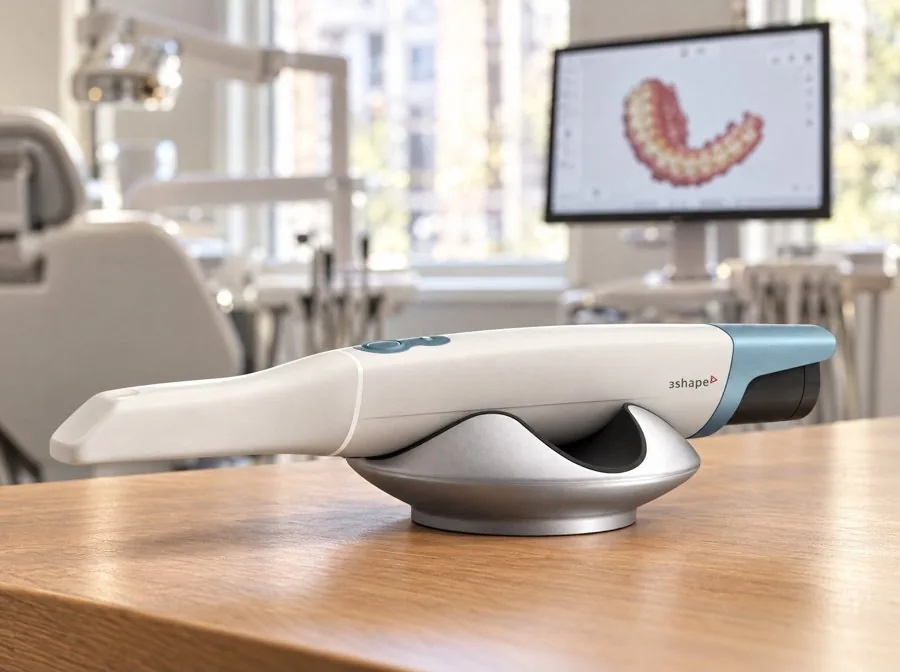
Flowable injection is a particularly precise form of bonding. We plan the new shape in advance and show it to you as a preview in your mouth. Then we transfer it to your teeth using a clear template: a flowable, tooth-coloured composite is injected through the template and cured.
- What speaks for it: one session, no reshaping, several teeth evenly and symmetrically, correctable later, usually less involved than veneers.
- What you should know: composite can darken over the years and lasts less long than ceramic. But polishing and repairs are possible at any time.
When veneers suit
- Several teeth should match each other in shape and colour.
- Teeth are darkly discoloured and cannot be whitened enough.
- Edges have worn over the years.
- You would like a result that stays colour-stable for a long time.
Long-term studies show that over 90 percent of ceramic veneers are intact after ten years.
And if it is only about colour?
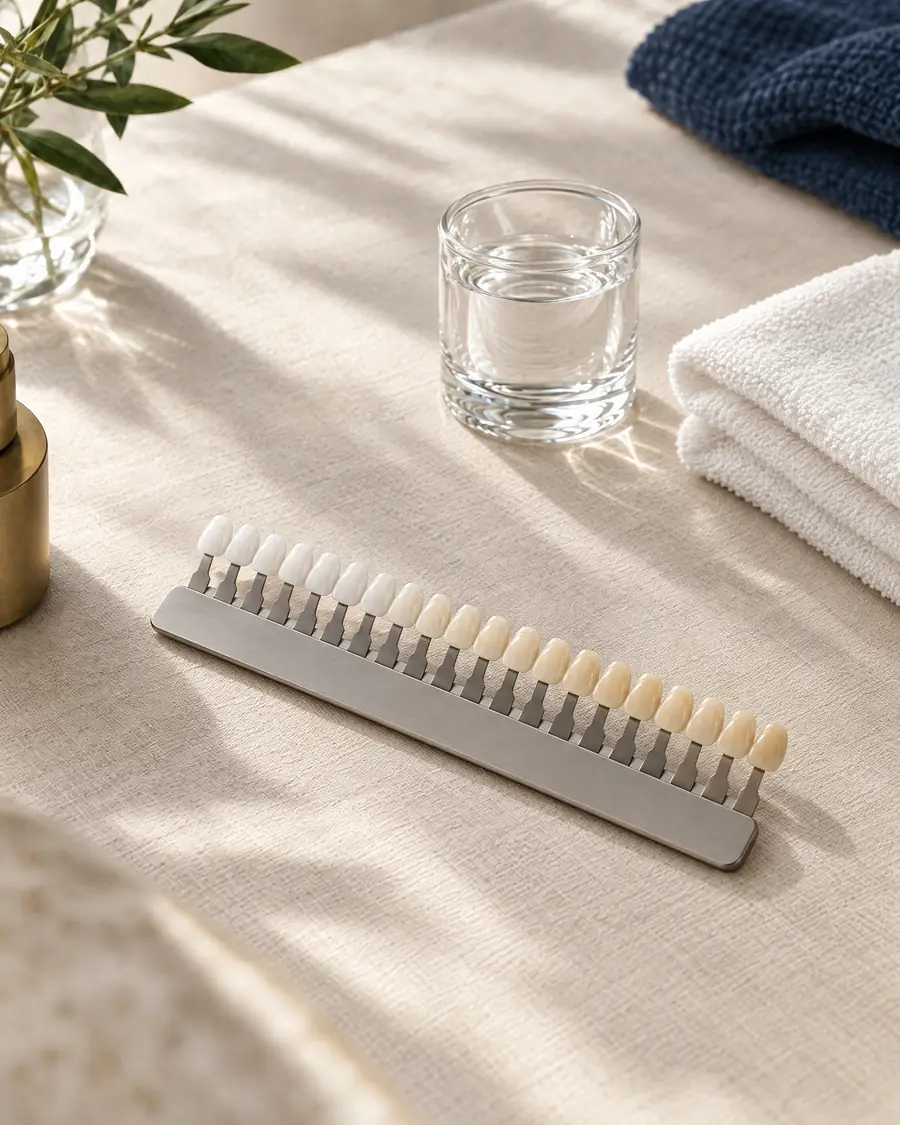
Then whitening is often enough. It lightens your own teeth without applying any material. If you plan bonding or veneers later, whiten first: resin and ceramic cannot be whitened and are matched to the new tooth colour.
Questions that help you decide
- How much should change: one tooth or your whole smile?
- How important is it to you that nothing is reshaped?
- How long should the result last without refreshing?
See the result in advance
For both paths, we plan the result in advance and show it to you as a preview directly in your mouth before we begin. That way you decide with a picture in front of you.