No-prep veneers are veneers for which the tooth is not ground down. They are suitable when a tooth can take a little extra material: with small or narrow teeth, gaps, worn edges, or when a tooth sits slightly further back. If the teeth already sit far forward, the result would look too bulky. Then a very thin reduction gives the more beautiful result. Whether it works without reduction for you, the preview in your mouth shows before anything is done to the tooth.
Updated: 14 November 2026
- It works without grinding when there is space for the veneer.
- The preview in your mouth shows it before you decide.
- Composite veneers need no grinding.
What “no-prep” means
“Prep” stands for preparation, the shaping of the tooth by removing a fine layer. With a no-prep veneer, this step is skipped. The veneer is bonded directly onto the intact enamel. That is where the bond holds best.
Two ways without grinding
| Ceramic without reduction | Composite veneers | |
|---|---|---|
| How it is made | a very thin shell from the laboratory | built up by hand directly on the tooth |
| Fits when | the tooth leaves space for the shell | almost always |
| Colour | colour-stable | can darken over the years, can be polished |
| Later | firmly bonded | can be added to and adjusted at any time |
When it works without grinding
- The teeth are small, narrow or short.
- There are gaps between the front teeth.
- The edges are worn, and the teeth may become longer.
- A tooth sits slightly further back than its neighbours.
When a very thin reduction is better
- The teeth already sit far forward or are crowded. Without reduction they would look thicker and bulkier.
- A tooth is heavily discoloured. A very thin shell does not cover the darkness.
- A small step would form at the gum line. Plaque collects there, and the gum reacts.
The goal stays the same: people see a smile, not a treatment. If a reduction of a fraction of a millimetre makes sense for that, we tell you plainly.
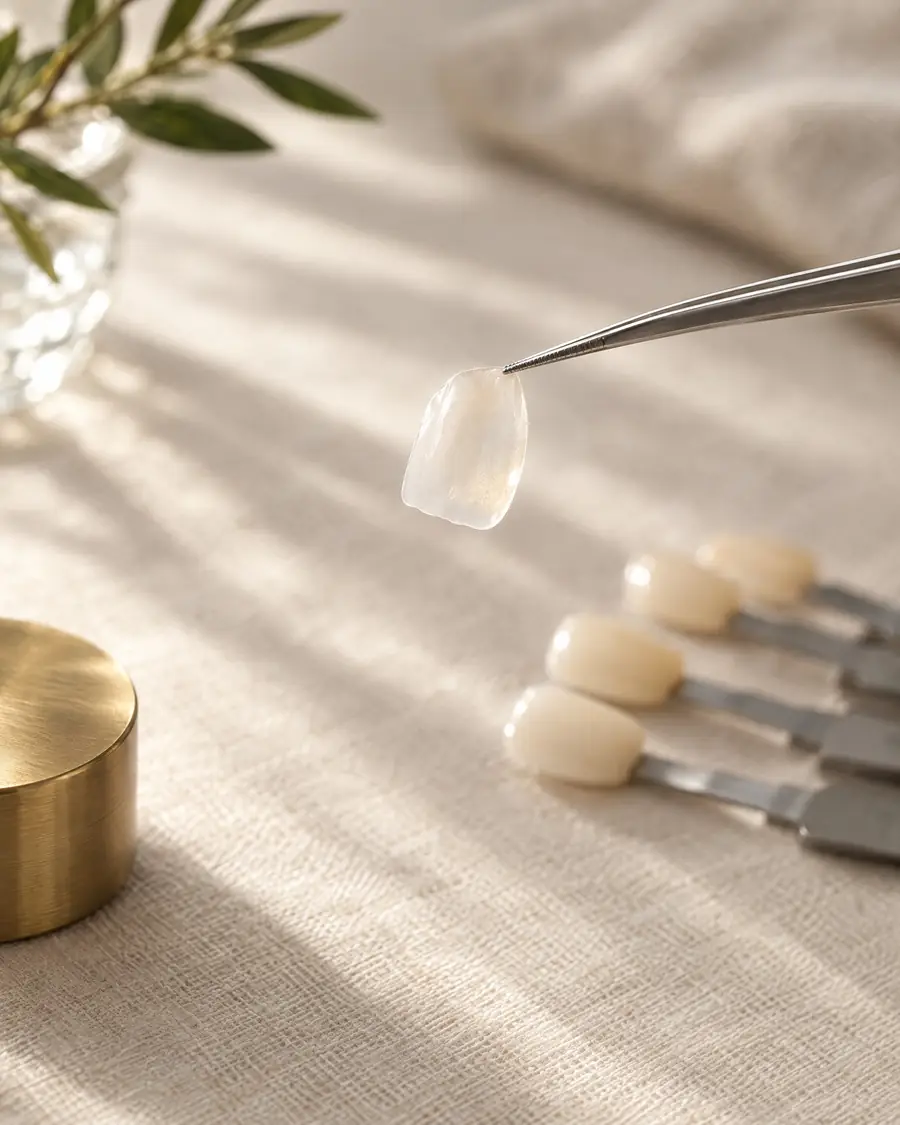
That is how thin a ceramic veneer can be. Any thinner and it becomes fragile.
Manhart, ZWP online, 2011“No grinding means I can take them off any time, right?”
Not quite. A ceramic veneer is firmly bonded to the enamel and is meant to last many years. Your tooth stays intact underneath, which is the advantage. But it cannot simply be taken off like a night guard. Composite, on the other hand, can be added to, adjusted and polished at any time.
How you see it beforehand
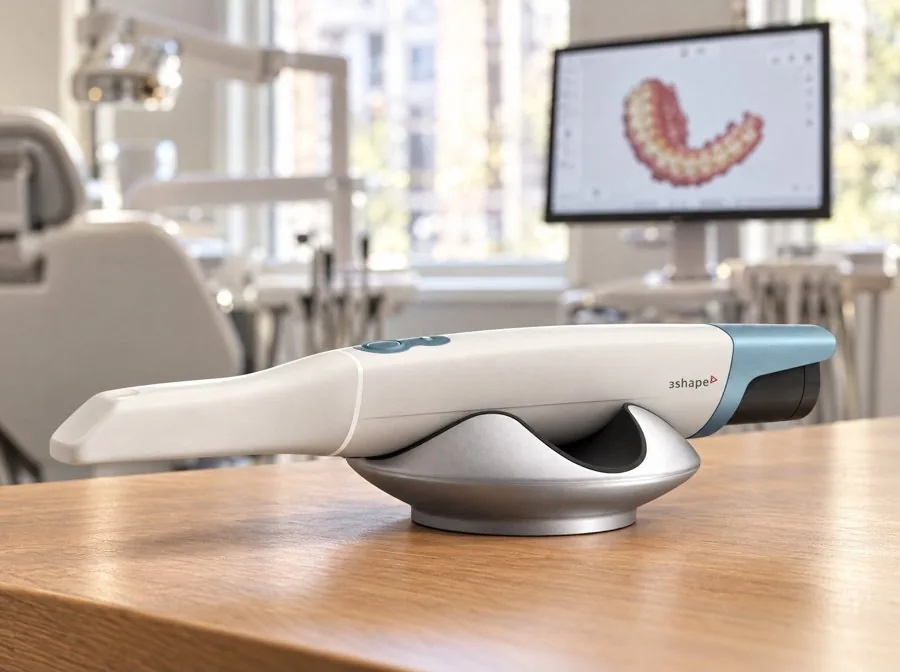
We plan shape and colour digitally and show you the result as a preview directly in your mouth. You also see whether the teeth look natural without reduction or too bulky. You decide only when you like what you see.
Would you like more beautiful teeth without anything being ground down? In a “Consultation & treatment plan” appointment we show you what is possible for your teeth.
Book a consultation