Sensitive teeth react with a brief, sharp pain to cold, sweet or acidic food, or when you brush. Usually dentine is exposed, for example where gums have receded or where acid or brushing too hard has worn away the enamel. At home, a toothpaste for sensitive teeth, a soft brush and gentle brushing help. Have the cause checked, because decay, a crack or a leaking filling can be behind the same feeling. At the practice we protect sensitive areas in a targeted way, often with a noticeable effect from the first appointment.
Updated: 9 November 2026
Why teeth become sensitive
Beneath the enamel lies the dentine. It is run through with tiny channels that reach the nerve. If it is exposed, cold, sweet food or pressure travel through these channels to the nerve, and it twinges.
Common reasons:
- Receding gums: at the neck of the tooth, the protection of the enamel is missing. Read more in “Receding gums: what causes it, and what helps?”.
- Acid: frequent soft drinks, fruit juices or citrus fruit attack the enamel.
- Brushing too hard, especially with a hard brush and scrubbing movements.
- Grinding and clenching: the pressure wears away tooth structure.
- After dental hygiene or whitening: then the sensitivity is temporary and usually passes within a day or two.
When it is more than sensitivity
If the pain lingers, throbs, comes when you bite or affects only a single tooth, something else is often behind it: decay, a crack, a leaking filling or an irritated nerve. Then an appointment soon is worthwhile. Read more in “Toothache: when should you see a dentist?”.
What helps at home
- A toothpaste for sensitive teeth, used regularly over a few weeks. If you like, dab a little on the sensitive area in the evening and do not rinse.
- Brush softly and gently: a soft brush, little pressure, small movements instead of scrubbing. An electric toothbrush with a pressure sensor warns you when you press too hard.
- After acidic food, rinse your mouth with water and wait a little before brushing.
- Have acidic food less often, and with meals rather than in between.
- If you grind, protect your teeth at night with a splint.
What we do at the practice
- Find the cause. We look closely, under magnification and, where it clarifies something, with digital X-rays.
- Protect sensitive areas. We seal exposed tooth necks or protect them with a fluoride varnish. Larger exposed areas we cover with tooth-coloured composite.
- Look at your habits. Brushing technique, diet, grinding: we show you what takes the strain off your teeth.
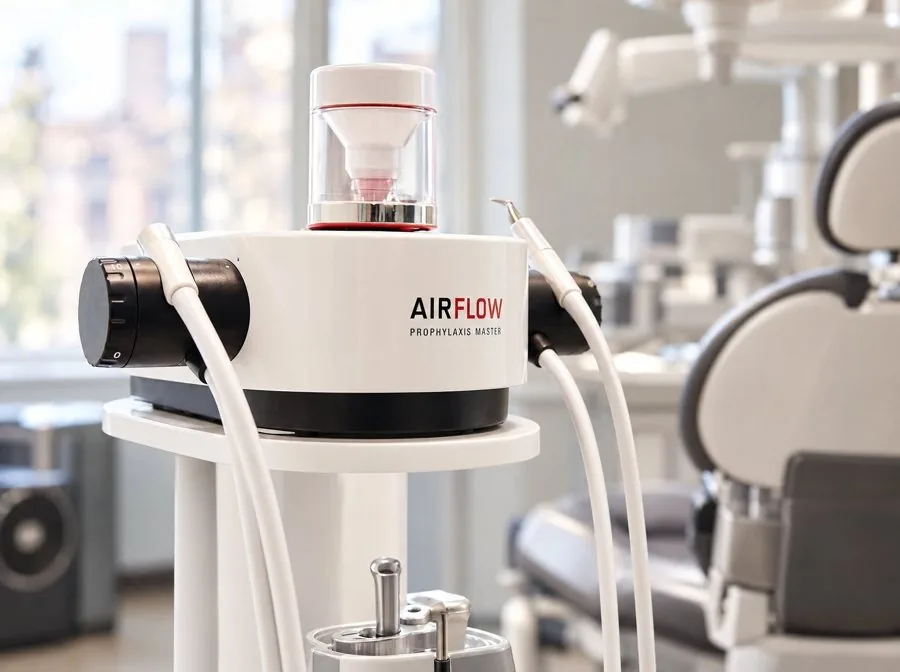
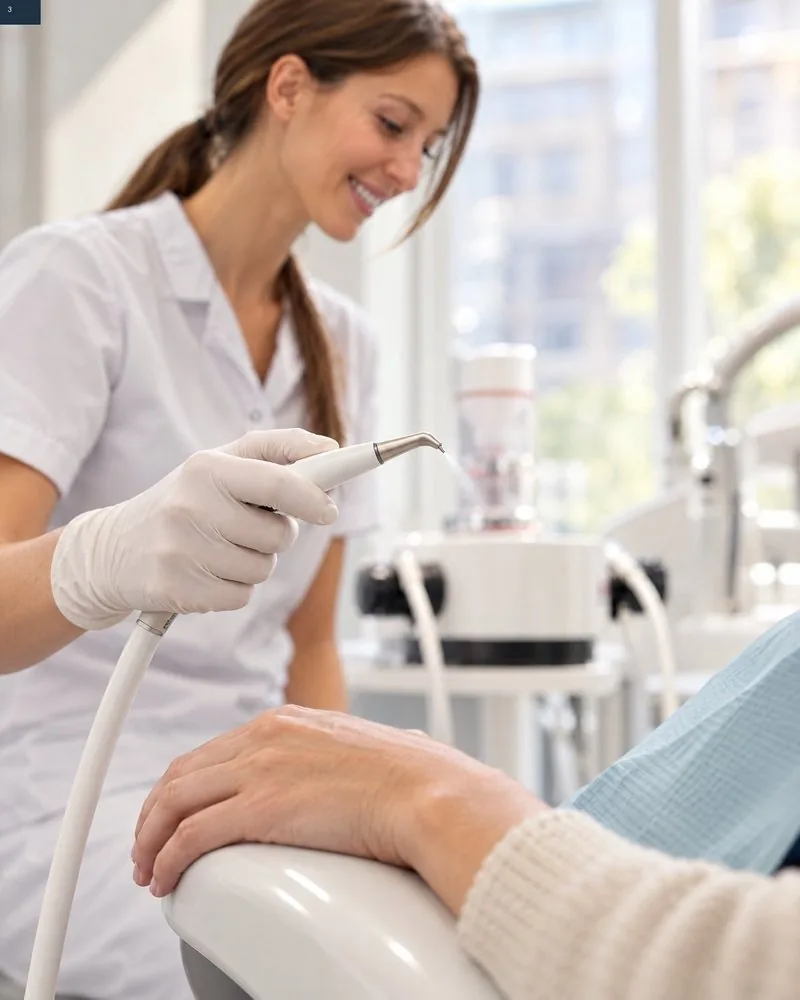
- Take care at your dental hygiene appointment. Tell us where it is sensitive. The warm powder-and-water jet works without pressure, and you can take a break at any time.