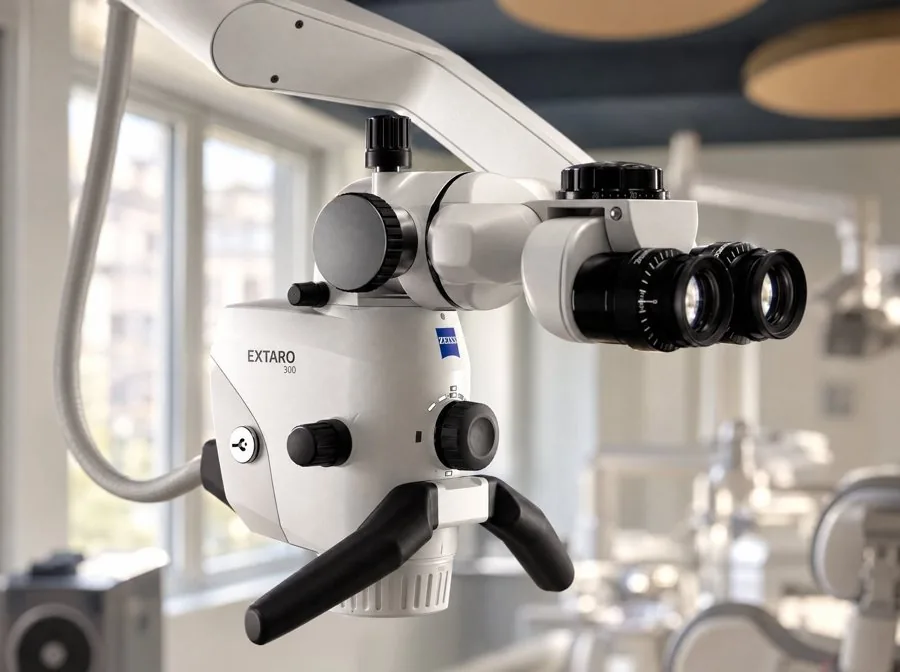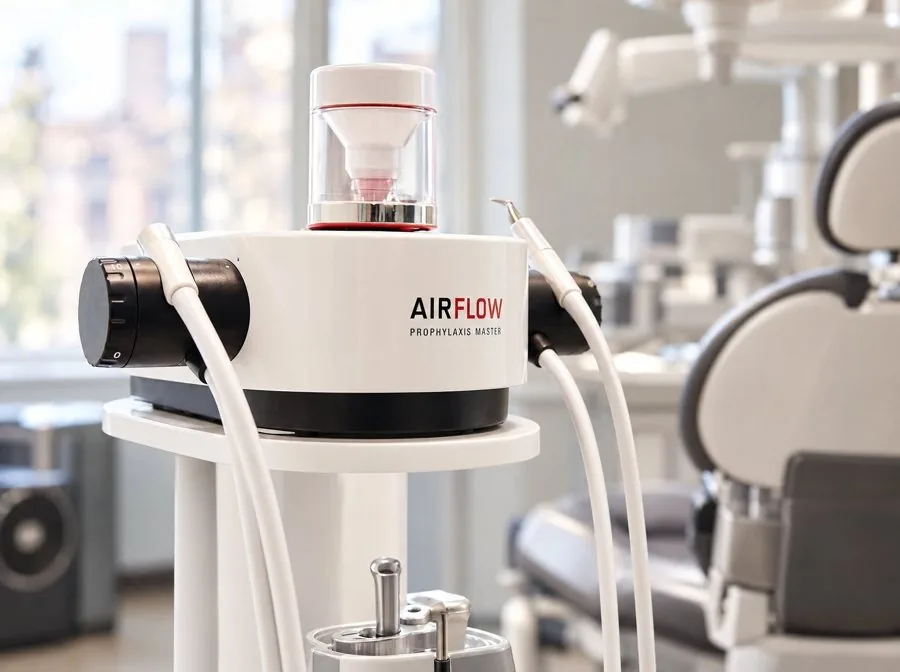
What helps most against fear of the dentist is whatever gives you back control: you know what happens next, you can ask for a break at any time and nobody rushes you. Tell us when you book or on the phone that you feel anxious. Then we plan more time, start with a conversation and explain every step before it happens. If you have been avoiding appointments for years because of your fear, behavioural therapy helps, and it helps for good.
Updated: 9 November 2026
Where the fear comes from
For many people, an earlier treatment lies behind it that hurt or where nobody explained what was happening. Others fear the injection, gagging or the feeling of being at someone’s mercy in the chair. Often shame is added if the last appointment was a long time ago.
That is understandable, and it is common. In around 5 to 10 out of 100 adults, the fear is so strong that it counts as an anxiety disorder and often prevents appointments for years, according to the German guideline on dental anxiety. Nobody here judges the state of your teeth. What matters to us is what comes next.
What you can do yourself
- Say so. Fear is not a weakness but information. The sooner we know, the better we can plan your appointment.
- Agree on a signal. For example, raising your hand: then we stop at once. Knowing that you can interrupt at any time takes away a large part of the fear for many people.
- Start small. At your first appointment, we treat what you want and what makes sense. The start can be a conversation or a gentle dental hygiene appointment.
- Breathe out slowly. Breathing out for longer than you breathe in calms the body. A few calm breaths in the waiting area and in the chair help many people.
- Bring whatever does you good. Your own music, or someone you trust to accompany you. Headphones and a blanket are ready for you.
What we do differently at Zahnlounge
- Talk first, then treat. Your first appointment begins with a conversation. You decide everything else in your own time.
- Explain every step before it happens. On screen, we show you what we see. People who understand what is happening imagine less.
- Breaks whenever you like. We slow down when you need it.
- As gentle as possible. Before the injection, we numb the area with a surface gel, and we only begin once the anaesthetic is fully working.
- A calm space. Warm, with oak and light, recognised by the Healing Architecture Award 2025. And dental hygiene with a warm powder-and-water jet, without pressure, is a good way to get back into it.
If the fear is very strong
If you have avoided appointments for years, or the fear starts days beforehand, it is more than nervousness. Then cognitive behavioural therapy with a psychotherapist helps. The guideline considers it the first choice because it reduces the fear for good. There are also digital self-help programmes. Talk to us, and we will help you find the right way.