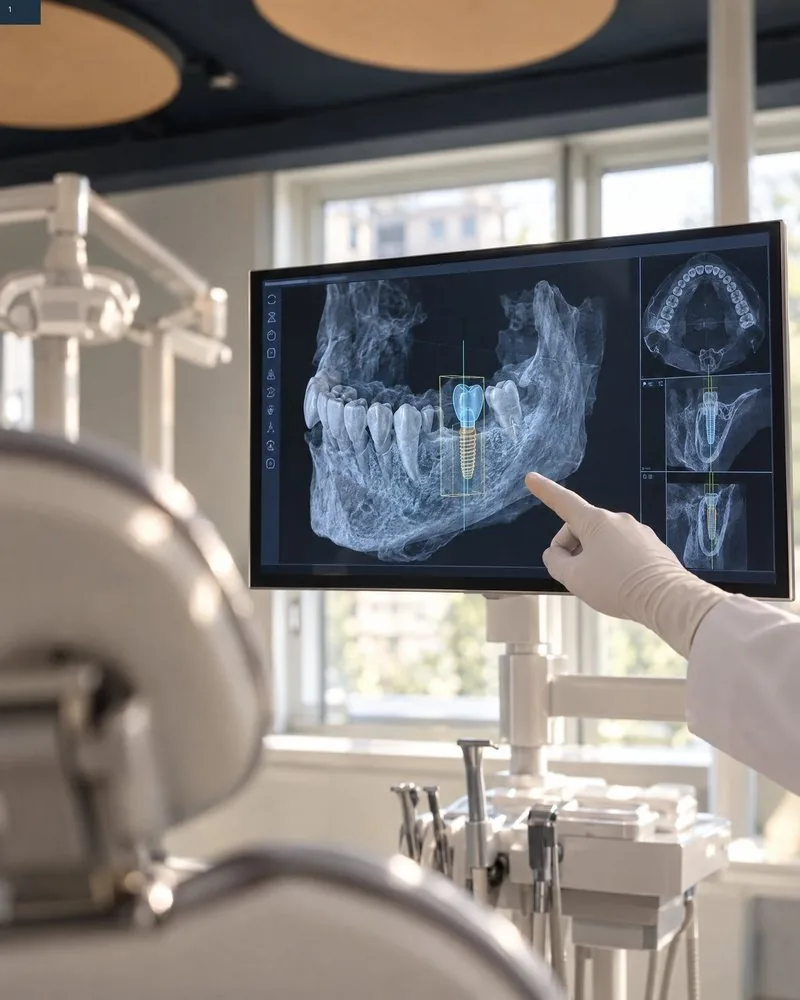
Toothache during pregnancy should be treated, not endured. Examination, local anaesthetic and treatment of the cause are possible. Where possible, we schedule plannable procedures in the second trimester. Please only take painkillers after checking with your doctor or dentist.
Updated: 14 November 2026
- Have pain checked, do not wait.
- Tell us which week of pregnancy you are in.
- Painkillers only after checking with your doctor or dentist.
What is possible
| During pregnancy | |
|---|---|
| Examination, check-up | yes |
| Dental hygiene | yes, expressly recommended |
| Local anaesthetic | yes |
| Filling, root canal treatment for pain | yes |
| X-rays | only when indispensable for the treatment |
| Whitening, plannable larger procedures | after the birth |
Why teeth cause more trouble now
Hormones make the gums more sensitive, and they bleed more easily. Nausea brings acid into the mouth, and many people eat more often between meals. Read more in “Bleeding gums in pregnancy: what helps?”.
“Will the anaesthetic harm my baby?”
A local anaesthetic acts at the tooth, and only a very small amount enters the bloodstream. Local anaesthetics are among the best-studied agents in dentistry and are considered acceptable during pregnancy. We use as little as possible.
If you have toothache, call us. Please tell us which week you are in.
Call