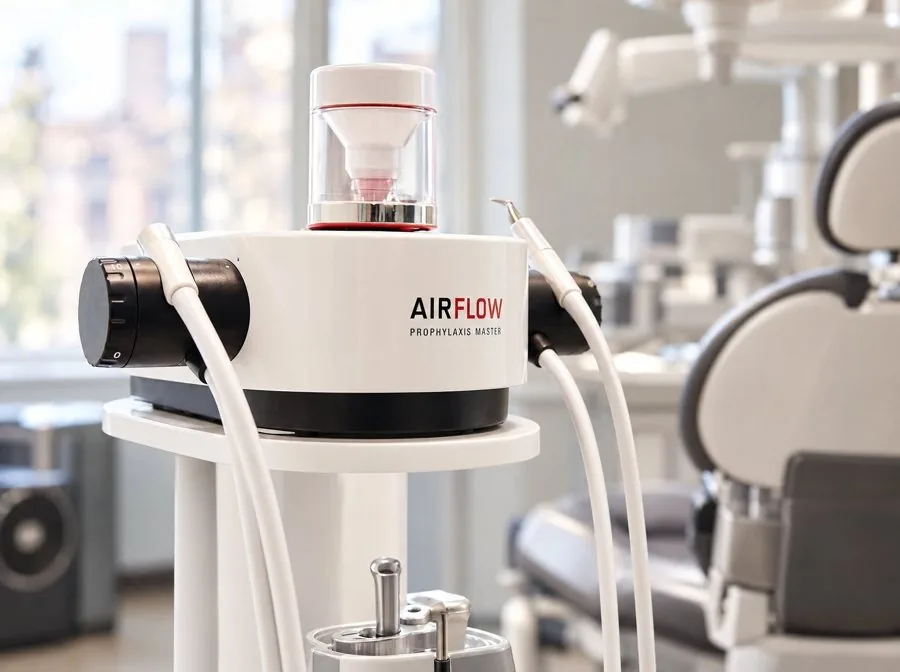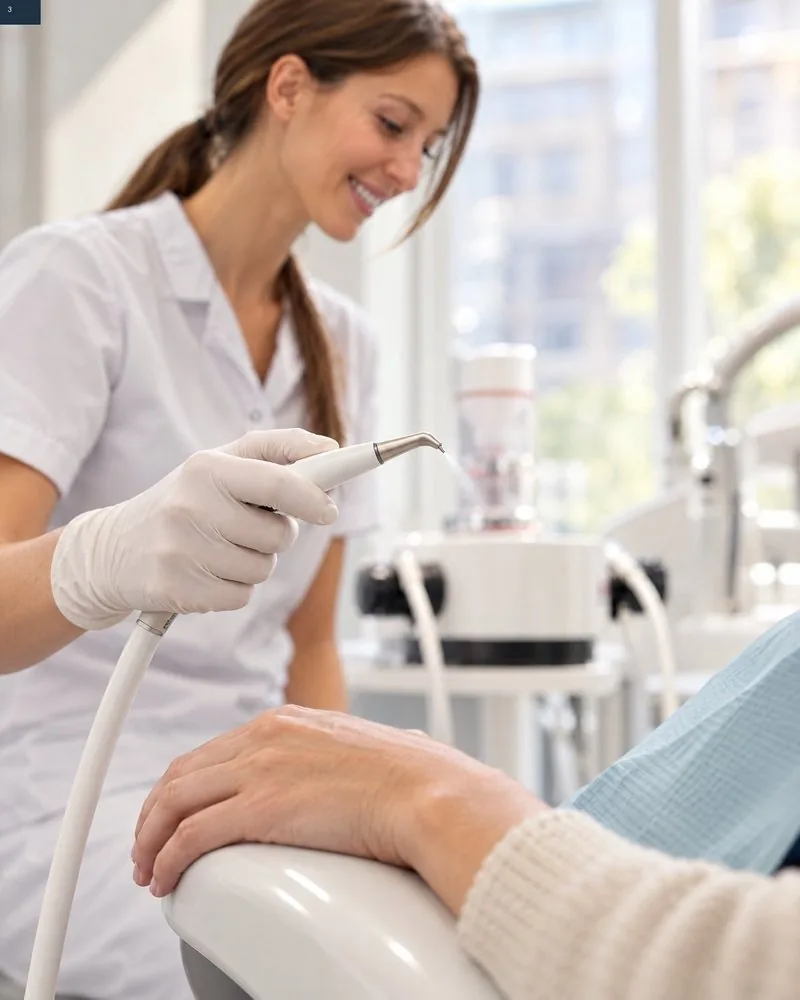
During pregnancy, many women find their gums bleed more easily, even if they brush no differently than before. Hormones increase blood flow to the gums and loosen them, so they react more sensitively to plaque. What helps is gentle, thorough care: a soft toothbrush, cleaning between your teeth every day and continuing to brush, even if it bleeds. Dental hygiene, the professional teeth cleaning, is possible and sensible during pregnancy too. Let us know when you book that you are pregnant.
Updated: 9 November 2026
Why your gums bleed now
The cause is plaque. Hormones only intensify how the gums react to it. This can begin in the first three months. Some women know something similar from puberty, the pill or menopause.
Sometimes a small, usually painless growth forms on the gum that bleeds easily. It is usually benign and often recedes after the birth. Show it to us all the same.
What helps at home
- Brush twice a day with a soft brush and fluoride toothpaste.
- Clean between your teeth every day, with floss or interdental brushes. If it bleeds, keep brushing gently. Usually the bleeding eases after a week or two.
- A mild mouthwash can be a useful addition.
- Have sweet and acidic food with meals rather than in between.
If you feel sick
After vomiting, rinse your mouth with water or a fluoride mouthwash. Wait a while before brushing, because the acid briefly softens the enamel. If the toothbrush makes you gag, a small brush head and a mild-flavoured toothpaste help.
Dental treatment during pregnancy
- Check-ups and dental hygiene are perfectly possible. We go by how you feel: breaks are possible at any time, and you lie in whatever position is comfortable for you. Many find an appointment in the middle third of pregnancy most comfortable.
- X-rays only when they clarify something important, digitally with a low dose and with a protective apron. X-rays that can be planned we postpone until after the birth.
- Pain and inflammation we treat now too. Local anaesthetic is possible during pregnancy.
- Larger, plannable treatments we postpone, where possible, until after the birth.
- Medication only after consultation. For painkillers, if in doubt, also ask your gynaecologist.
A healthy mouth for you and your child
Bleeding gums can be a warning sign of a more serious inflammation of the structures that hold the teeth. So have them checked during pregnancy too. The old saying “every child costs a tooth” no longer holds with good care.