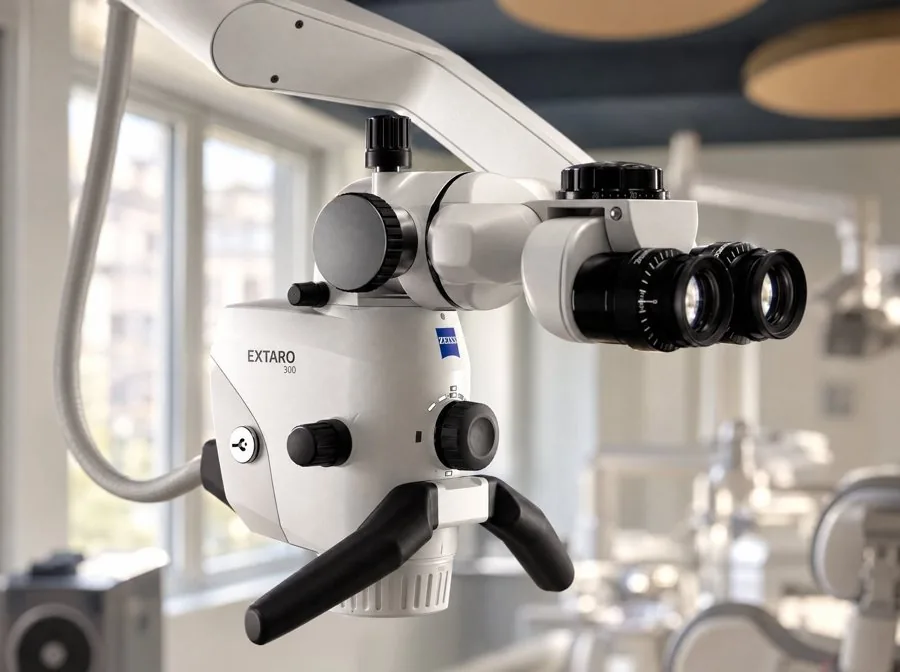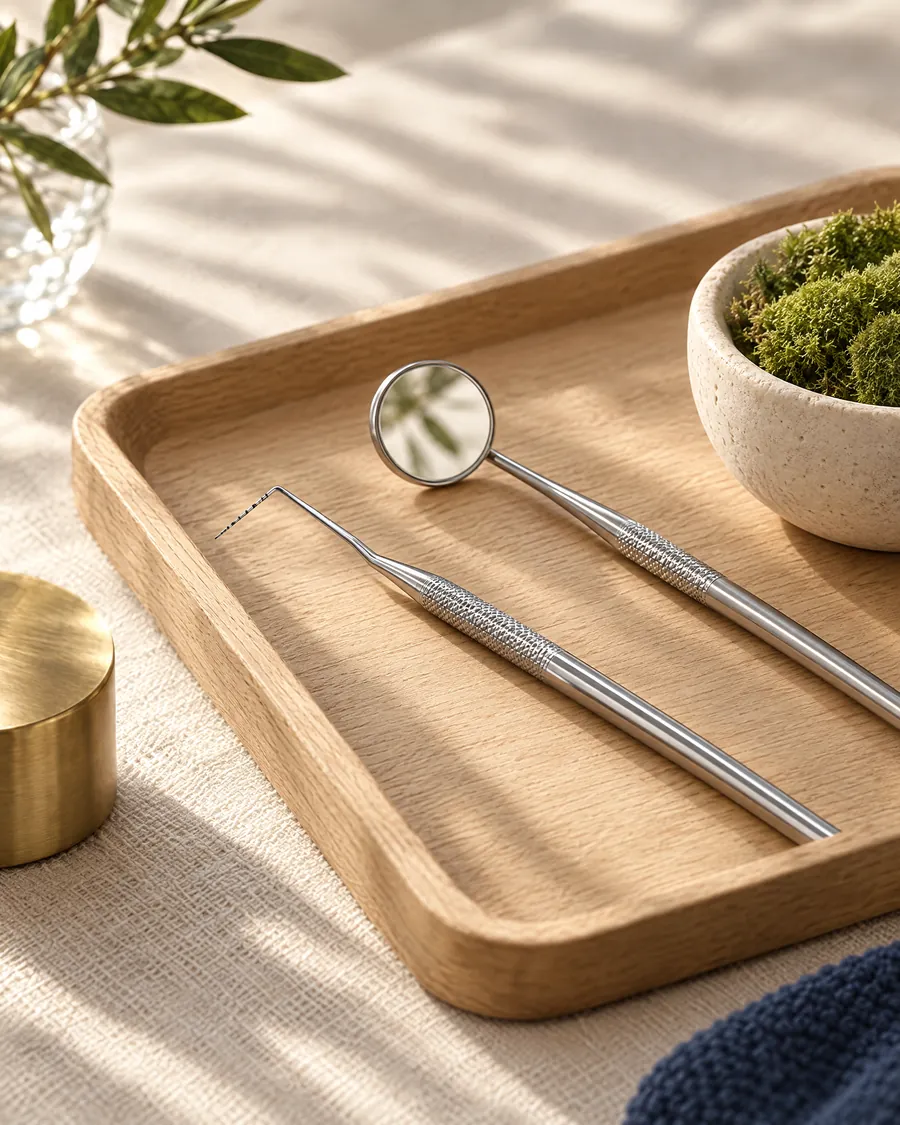
To measure, we gently slide a fine probe with a millimetre scale between tooth and gum. Healthy gums fit tightly: the values are 1 to 3 millimetres, and there is hardly any bleeding. From around 4 millimetres, it is called a gum pocket. It points to periodontitis, especially if it bleeds during measuring. From around 6 millimetres, a pocket counts as deep. The good news: after a thorough clean, the gum often reattaches and the values go down. That does not bring back lost bone, but the inflammation comes to a standstill.
Updated: 9 November 2026
How it is measured
- We measure each tooth at several points, usually six.
- The probe has a rounded tip and is applied only lightly. Most people feel some pressure. If the gum is inflamed, it can be sensitive.
- We note the depth, whether it bleeds, whether the gum has receded and whether a tooth is loose.
- Digital X-rays show how much bone is holding the teeth.
What the numbers mean
| Measurement | Meaning | What follows |
|---|---|---|
| 1 to 3 mm, no bleeding | healthy | regular check-ups and dental hygiene |
| 1 to 3 mm, bleeding | gum inflammation, without bone loss so far | better interdental care and dental hygiene; usually heals completely |
| 4 to 5 mm | gum pocket, suspected periodontitis | detailed findings with an X-ray, cleaning of the pockets |
| 6 mm or more | deep pocket | periodontitis treatment and close aftercare |
A single value is not a verdict. What counts is the overall picture: how many sites are affected, whether they bleed and how the values change over time. Healthy gums bleed at fewer than 10 out of 100 measuring sites.
Why pockets form
Plaque at the gum line triggers inflammation. If it persists, the gum detaches from the tooth and bacteria settle deeper, where toothbrush and floss can no longer reach. Over time, the inflammation breaks down the bone around the tooth. For a long time this happens without pain. Smoking, diabetes and a family predisposition increase the risk.
Read more about the first signs in “Gum inflammation (gingivitis): what helps?”.
How pockets become shallower again
- Measure and understand. We measure the pockets, check the bone with digital X-rays and show you where the inflammation sits.
- Clean thoroughly. The pockets are cleaned gently, under local anaesthetic if you wish. That way the gum can reattach.
- Care at home. You receive personal guidance for cleaning between your teeth. It carries the success of the treatment.
- Measure again and maintain. After a few weeks we measure again. After that, regular dental hygiene keeps the result stable, often every three to four months after periodontitis.
You will know how many appointments you need after the first examination.