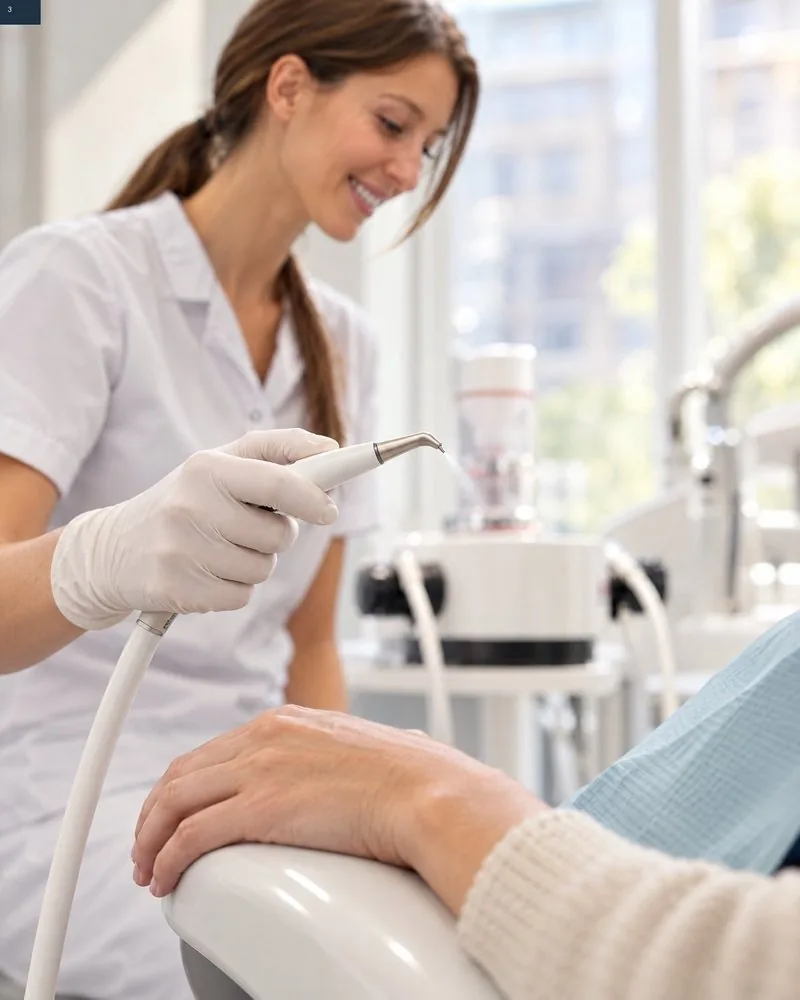
No, a teeth cleaning with Guided Biofilm Therapy, GBT for short, does not hurt. A warm powder-and-water jet removes biofilm, plaque and stains from every tooth and every surface, without pressure. We then remove any remaining tartar precisely with ultrasound and finish gently by hand. The treatment is kind to enamel, gums and implants and feels pleasantly warm.
Updated: 9 November 2026
What is biofilm?
Biofilm is the soft, sticky layer of bacteria that forms on your teeth every day. It likes to sit between the teeth and at the gum line, where a toothbrush struggles to reach. If it stays, it hardens into tartar. Biofilm is the starting point for decay and gum inflammation.
The steps at a glance
- Arrive and talk. You tell us what matters to you and where your teeth are sensitive.
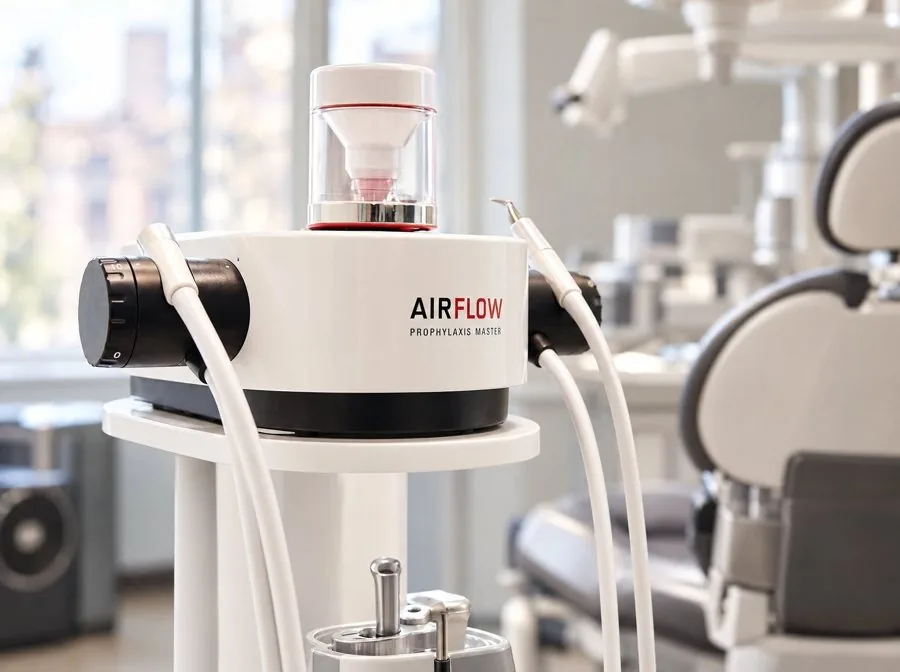
- Gentle cleaning. A warm jet of water and fine powder from the EMS Airflow Prophylaxis Master removes biofilm, plaque and stains, without pressure. We clean every tooth and every surface, not only where you can see plaque.
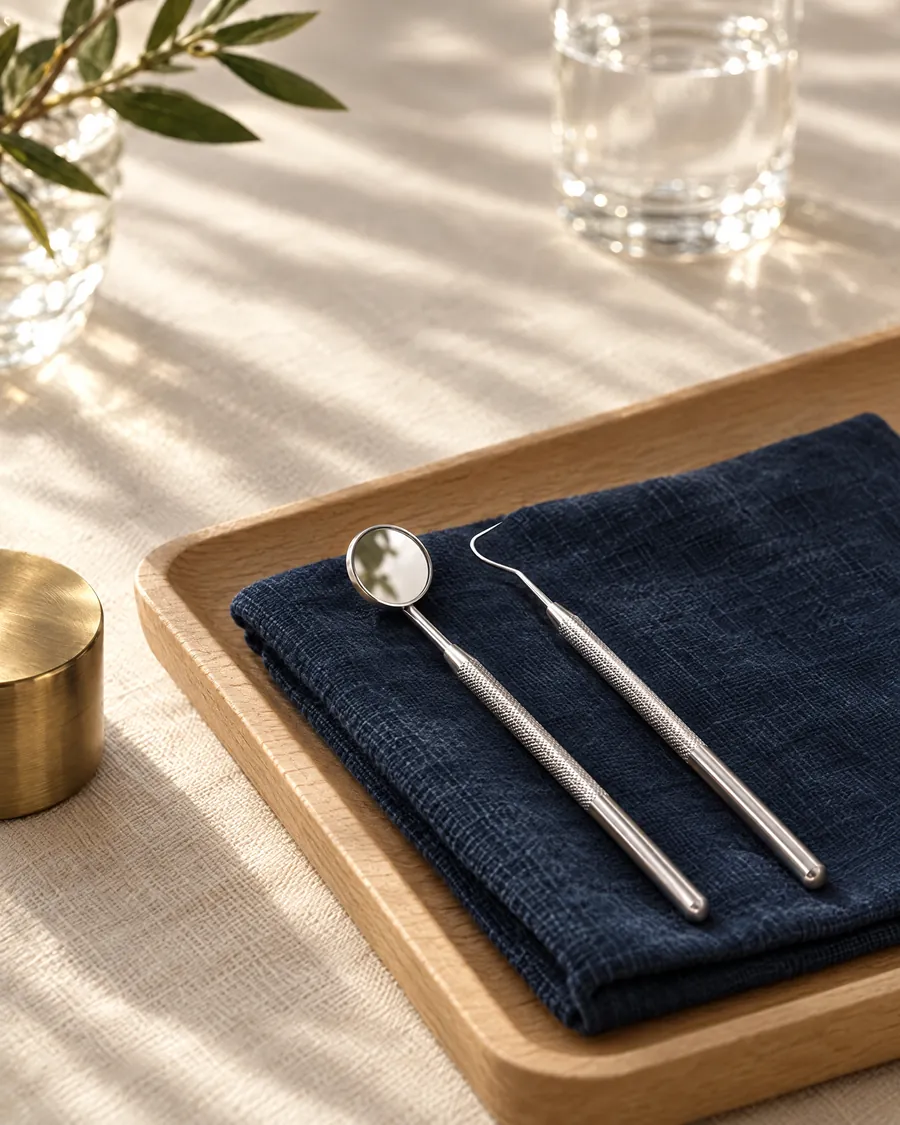
- Precise finishing. We remove any remaining tartar with ultrasound and finish by hand, individually and gently, at and below the gum line.
- Check and advise. At the end we look at the result together. You receive personal advice on caring for your teeth at home and on the interval until your next appointment.
Does it hurt?
No. The powder-and-water jet is warm and works without pressure. Most people find it pleasant. Finishing with ultrasound and by hand is also gentle and only where tartar remains. If some areas are sensitive, such as exposed tooth necks, tell us. We take care with them, and you can take a break at any time.
Are the teeth stained with a dye first?
Not for adults. We clean every tooth and every surface anyway, so a dye is not needed. For children we do colour the plaque: that way they see for themselves where it sits and learn to brush it away.
Who GBT is suitable for
For almost everyone, including people with implants, crowns and fixed braces, and for children from the age of six. With implants in particular, the gentle cleaning is an advantage. For sensitive gums, implants or braces, shorter intervals between appointments make sense.
How long and how often?
Allow around an hour. For most people, a dental hygiene appointment every six months makes sense. We will discuss the right rhythm for you at your appointment.