In everyday language, the three terms often mean the same thing: plaque and stains are removed professionally. The difference lies in who treats you and how far the treatment goes. Dental hygiene with a qualified dental hygienist includes your gums.
Updated: 9 November 2026
Three terms, briefly explained
Teeth cleaning is the everyday term. It means the professional removal of plaque, tartar and stains.
PZR is the German abbreviation for “professionelle Zahnreinigung”, professional teeth cleaning. It is mainly used in Germany and means the same thing.
Dental hygiene in Switzerland means treatment by a qualified dental hygienist (Dipl. Dentalhygienikerin HF). It includes the cleaning and goes further: a look at your gums, cleaning at and below the gum line, and personal advice on caring for your teeth at home. Read more about dental hygiene in Zürich-Enge.
Who treats you?
In Swiss practices, two professions carry out the cleaning.
| Qualified dental hygienist (Dipl. Dentalhygienikerin HF) | Prophylaxis assistant | |
|---|---|---|
| Training | three years of study at a college of higher education | dental assistant with further training |
| Works | on teeth and gums, including inflammation and gum pockets | with healthy gums, above the gum line |
| Assesses | the condition of the gums and supports the treatment of gum disease | reports anything unusual to the dentist |
Both professions have their place. What matters is that the treatment suits your gums.
When dental hygiene is the right choice
- Your gums bleed when you brush.
- It has been a while since your last appointment.
- You have implants, crowns or fixed braces.
- You would like to know how your gums are doing.
And what is GBT?
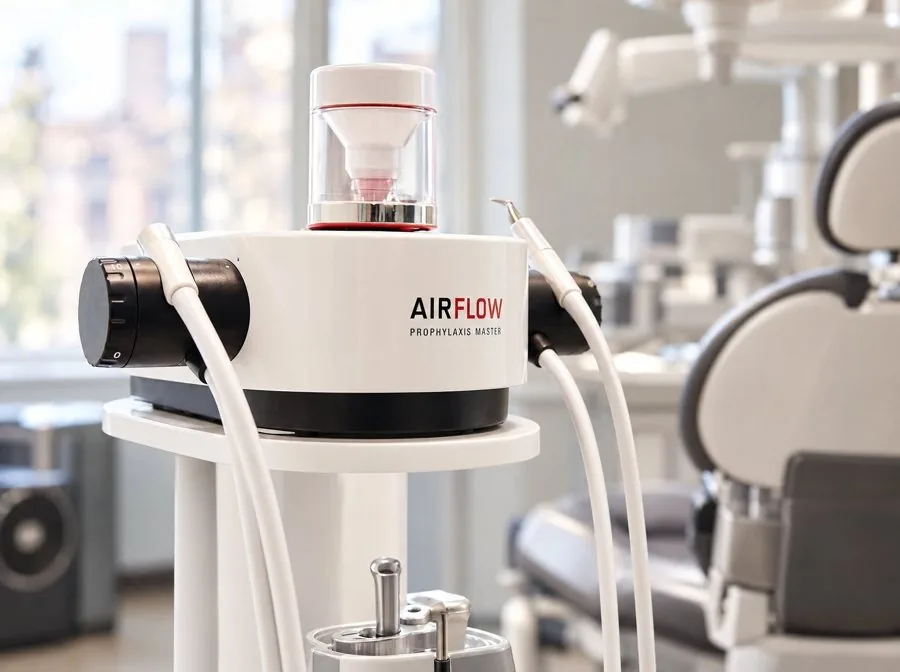
GBT stands for Guided Biofilm Therapy. It is not a profession of its own but a clearly structured procedure: a warm powder-and-water jet removes biofilm, plaque and stains from every tooth and every surface. Tartar is then removed precisely with ultrasound and gently finished by hand. The treatment is kind to enamel and gums, feels pleasantly warm and is painless.
How often?
For most people, every six months. For sensitive gums, implants or fixed braces, shorter intervals make sense. You discuss the right rhythm at your appointment.